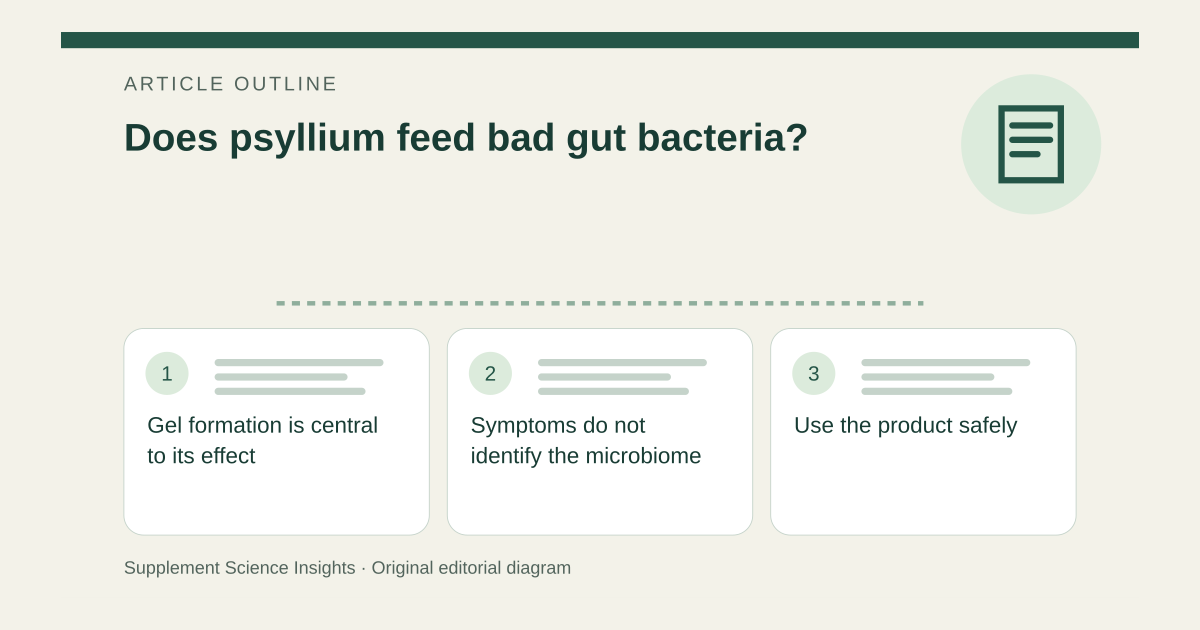
Gel formation is central to its effect
ACG describes psyllium as a fiber that holds water and changes stool consistency. It is less readily fermented than many fibers promoted as prebiotics. Those properties matter more than a simple good-versus-bad bacteria story. [1]
Symptoms do not identify the microbiome
Bloating, flatulence and cramping can occur with psyllium. ACG advises gradual dose titration when appropriate. These symptoms are not a diagnostic test for dysbiosis, infection or bacterial overgrowth, and more fiber is not automatically the solution. [1][2]
Use the product safely
MedlinePlus advises adequate liquid with psyllium and review for swallowing difficulty or intestinal blockage. It can also require separation from some medicines. Do not take dry powder or ignore persistent symptoms because a label calls the product natural fiber. [3]
Evaluate the bowel outcome
Imagine stool consistency improves but a large initial serving causes bloating. Review the dose, water and other dietary changes rather than assuming bacteria are being harmed. Persistent pain or major bowel changes need assessment beyond the supplement. [1][3]
| Question | Practical interpretation |
|---|---|
| Poor fermentation | Different from many prebiotics |
| Bloating | Not proof of bad bacteria |
| Dry powder | Follow liquid directions |
| Persistent bowel symptoms | Review the cause |
Sources for this article
- ACG - IBS Treatment
Source consulted: 2026-09-21. This is a reference resource, not a claim that we conducted the studies or tested a product. - Dysbiosis: What It Is, Symptoms, Causes, Treatment & Diet
Source consulted: 2026-09-21. This is a reference resource, not a claim that we conducted the studies or tested a product. - Psyllium: MedlinePlus Drug Information
Source consulted: 2026-09-21. This is a reference resource, not a claim that we conducted the studies or tested a product.