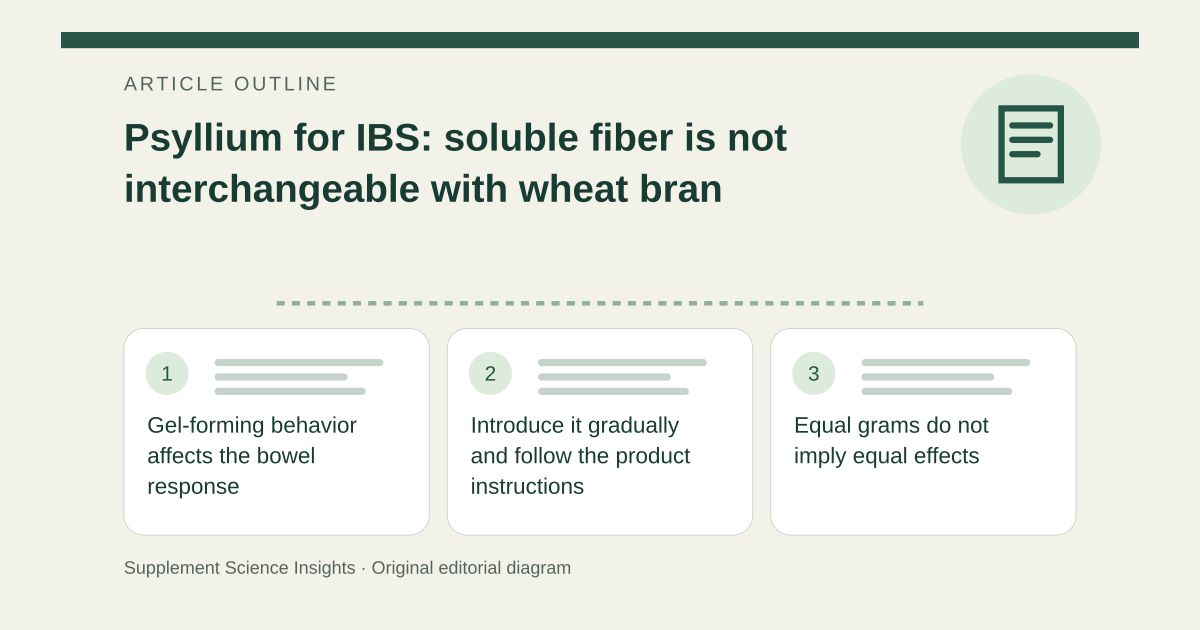
Gel-forming behavior affects the bowel response
ACG describes psyllium as a poorly fermented, soluble, gel-forming fiber that can soften stool and increase fecal biomass. Stool frequency, consistency and straining are among the symptoms most likely to improve. [1]
Its treatment summary recommends psyllium rather than wheat bran for overall IBS symptoms, with a strong recommendation and moderate evidence quality. That does not mean every individual will respond or every symptom will resolve. [1]
Introduce it gradually and follow the product instructions
ACG describes starting low and increasing gradually over days to weeks. Bloating, distension, flatulence and cramping can occur, so tolerability matters when the amount is adjusted. [1]
The recommendation does not establish that a high starting dose works faster. The exact preparation and its fluid instructions should still be followed, particularly when swallowing difficulties or other medical concerns exist. [1]
Equal grams do not imply equal effects
Imagine replacing a psyllium serving with the same number of grams of wheat bran. The total fiber may match, but the physical properties and IBS evidence do not.
| Detail | Interpretation |
|---|---|
| Psyllium | Soluble gel-forming fiber |
| Wheat bran | Not an interchangeable IBS intervention |
| Gradual increase | Helps assess tolerance |
Sources for this article
- ACG - IBS Treatment
Source consulted: 2026-09-17. This is a reference resource, not a claim that we conducted the studies or tested a product.