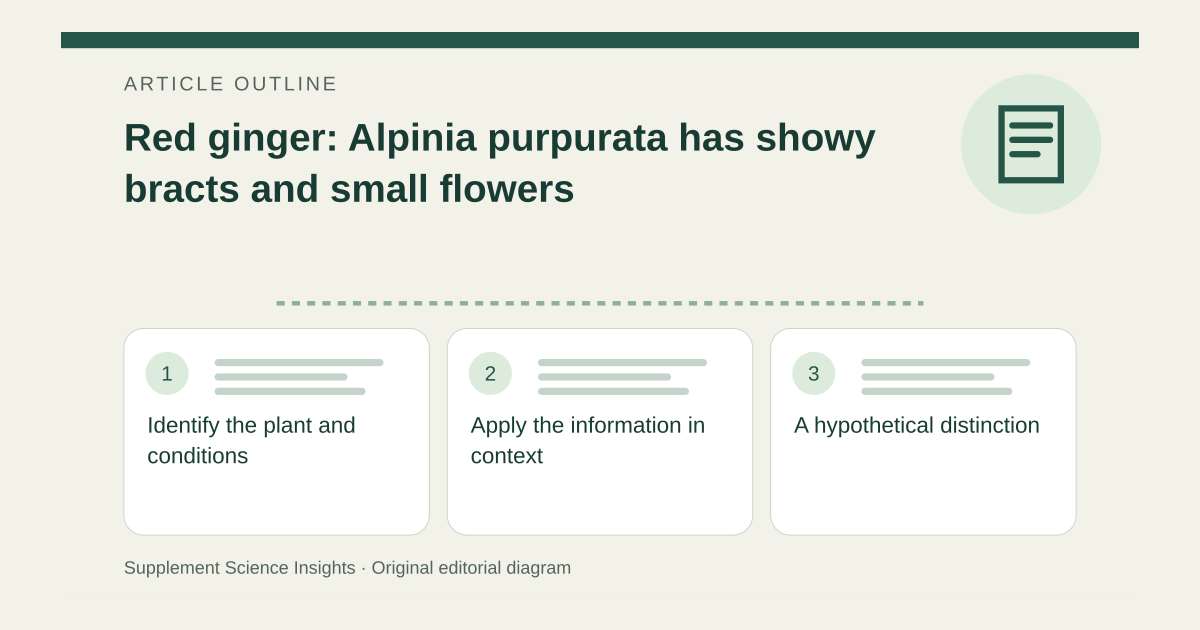
Identify the plant and conditions
NParks describes Alpinia purpurata as an upright tropical plant with leafy stems and clustered rhizomes. The small tubular white flowers are distinct from the larger showy bracts. [1]
Its profile lists sun to semi-shade and moist, fertile, well-drained soils. Plants can spread extensively; rhizome division and aerial plantlets are among the recorded propagation methods. [1]
Apply the information in context
Red ginger is a common name, so it should be paired with a scientific identification before applying this account. Ethnobotanical uses in a plant database are records of use, not controlled clinical evidence or a prescription. [1]
A hypothetical distinction
Imagine a plant is sold under a color-based name. The color can help describe its appearance, but it cannot establish the exact species or the effect of a preparation made from it.
| Detail | Interpretation |
|---|---|
| Alpinia purpurata | Named species |
| Small white flowers | Separate from bracts |
| Recorded traditional use | Not clinical proof |
Sources for this article
- NParks | Alpinia purpurata
Source consulted: 2026-09-19. This is a reference resource, not a claim that we conducted the studies or tested a product.