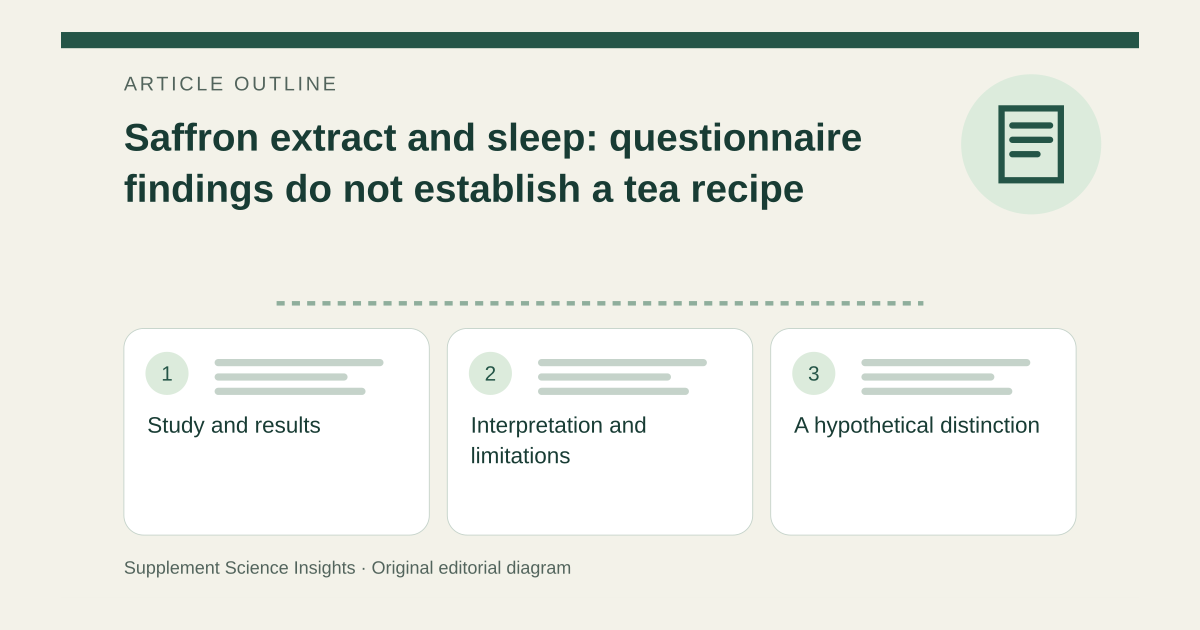
Study and results
Sixty-three adults with self-reported poor sleep were randomized to extract or placebo. Results were based on fifty-five participants and included an insomnia questionnaire, restorative-sleep ratings and a sleep diary. [1]
Several questionnaire outcomes favored saffron, with no reported adverse effects during the trial. The authors called for larger, longer studies with objective sleep measures. [1]
Interpretation and limitations
Pharmactive Biotech Products funded the study and was reported not to participate in design, analysis or writing; authors declared no conflicts. Subjective outcomes and the selected population limit inference. Neither the extract dose nor its results define an equivalent tea preparation. [1]
A hypothetical distinction
Imagine a capsule has a standardized composition while a cup of tea has an unmeasured extraction yield. Equal plant names do not make their exposures interchangeable.
| Detail | Interpretation |
|---|---|
| Standardized extract | Tested preparation |
| Sleep questionnaire | Subjective outcome |
| Homemade tea | Unverified equivalence |
Sources for this article
- Effects of saffron on sleep quality in healthy adults with self-reported poor sleep: a randomized, double-blind, placebo-controlled trial - PubMed
Source consulted: 2026-09-19. This is a reference resource, not a claim that we conducted the studies or tested a product.