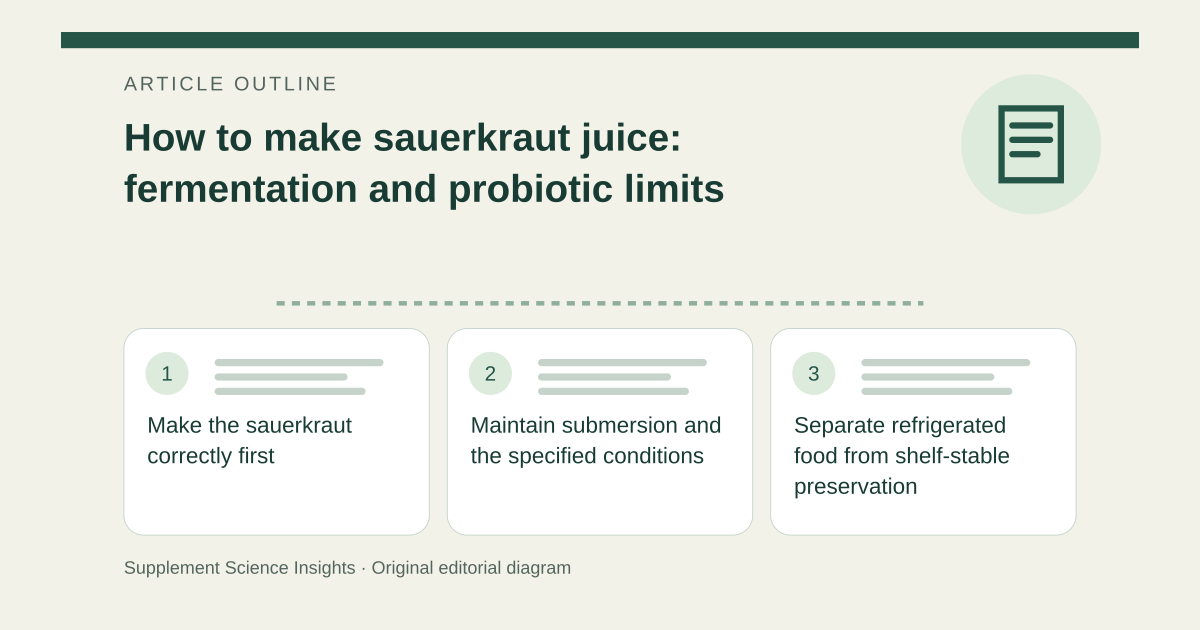
Make the sauerkraut correctly first
NCHFP’s method works in portions of five pounds of shredded cabbage with three tablespoons of canning or pickling salt. Mix and pack in a suitable food-grade fermentation vessel so released juice covers the cabbage. If needed, the method adds boiled, cooled brine made with one and a half tablespoons of salt per quart of water. [1]
Maintain submersion and the specified conditions
Use the recipe’s plate and weights, cover the vessel, and follow its monitoring instructions. At 70–75°F, fermentation generally takes three to four weeks; at 60–65°F it can take five to six weeks. Do not reduce the salt or transfer these timings to an unrelated vegetable-juice recipe. [1]
Separate refrigerated food from shelf-stable preservation
Fully fermented sauerkraut can be refrigerated. Shelf-stable storage requires the separate tested canning process. Removing liquid should not leave stored cabbage inadequately covered. Heat processing also means a fermented product should not automatically be described as containing live probiotic cultures. [1][2]
Do not use brine volume as a clinical dose
Imagine someone drinks a glass because more juice seems to mean more probiotics. The microbial composition is not standardized, while the brine contains substantial added salt. A small culinary use and a therapeutic claim are different decisions; the recipe does not establish an effective daily probiotic serving. [1][2]
| Feature | Meaning |
|---|---|
| Tested salt ratio | Part of fermentation method |
| Submerged cabbage | Required process control |
| Refrigerated versus canned | Different preservation pathways |
| Amount of juice | Not a validated probiotic dose |
Sources for this article
- Sauerkraut - National Center for Home Food Preservation
Source consulted: 2026-09-21. This is a reference resource, not a claim that we conducted the studies or tested a product. - Probiotics - Health Professional Fact Sheet
Source consulted: 2026-09-21. This is a reference resource, not a claim that we conducted the studies or tested a product.