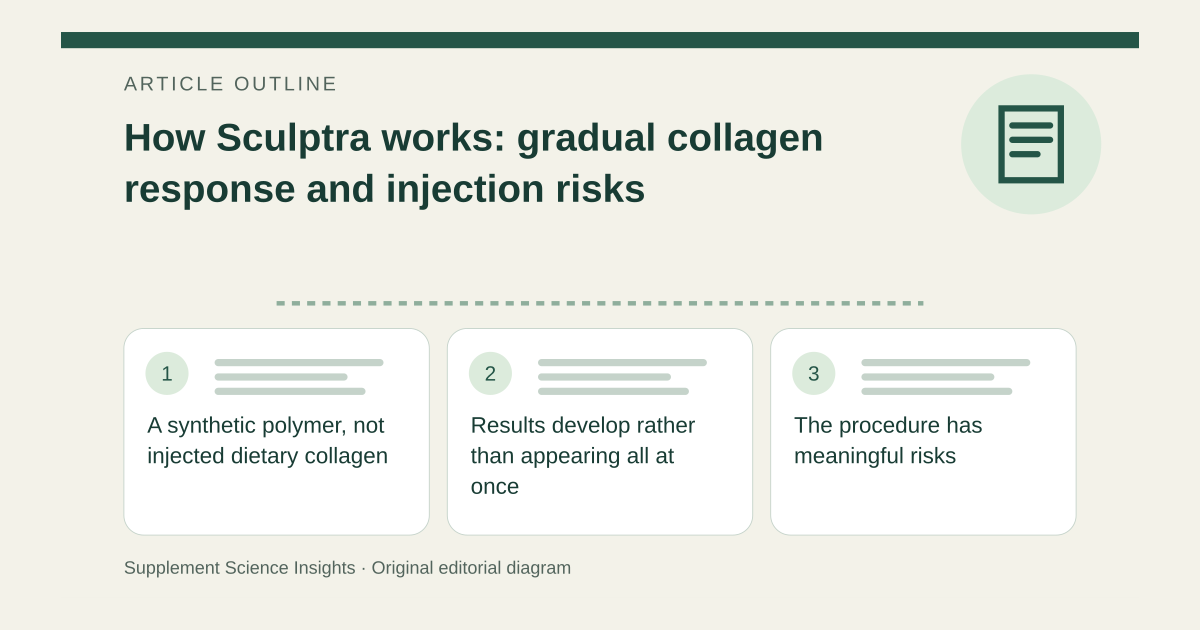
A synthetic polymer, not injected dietary collagen
FDA describes poly-L-lactic acid, or PLLA, as a biodegradable, biocompatible manufactured polymer used in some fillers. Sculptra’s manufacturer describes its particles as stimulating the body’s own collagen. The material and route differ from collagen powders, creams and other types of injectable filler. [1][2]
Results develop rather than appearing all at once
FDA describes PLLA treatment as a series of injections over months, with effects becoming more apparent over weeks and potentially lasting up to two years. These are general material characteristics, not a promise for an individual. The Sculptra safety information specifically cautions against overcorrection because improvement is expected to be gradual. [1][2]
The procedure has meaningful risks
The manufacturer lists swelling, tenderness, bruising and lumps among possible effects, including some delayed lumps. Injection into a blood vessel can cause serious vascular complications. Sculptra is for trained healthcare practitioners; its warnings include ingredient allergy and a history of keloid or hypertrophic scarring. Safety is not established in pregnancy, breastfeeding or people under 18. [2]
Ask about the treatment plan and follow-up
Imagine someone wants a final result before an event next week. A gradual collagen-stimulation procedure may not match that expectation. Discuss the intended area, number and spacing of sessions, recovery, possible complications and follow-up with a qualified practitioner before proceeding. [1][2]
| Expectation | Question for the practitioner |
|---|---|
| Immediate final appearance | How does the response develop? |
| Long-lasting correction | What range of outcomes and follow-up apply? |
Sources for this article
- FDA-Approved Dermal Fillers | FDA
Source consulted: 2026-09-20. This is a reference resource, not a claim that we conducted the studies or tested a product. - Sculptra® Science | Stimulating Natural Collagen
Source consulted: 2026-09-20. This is a reference resource, not a claim that we conducted the studies or tested a product.