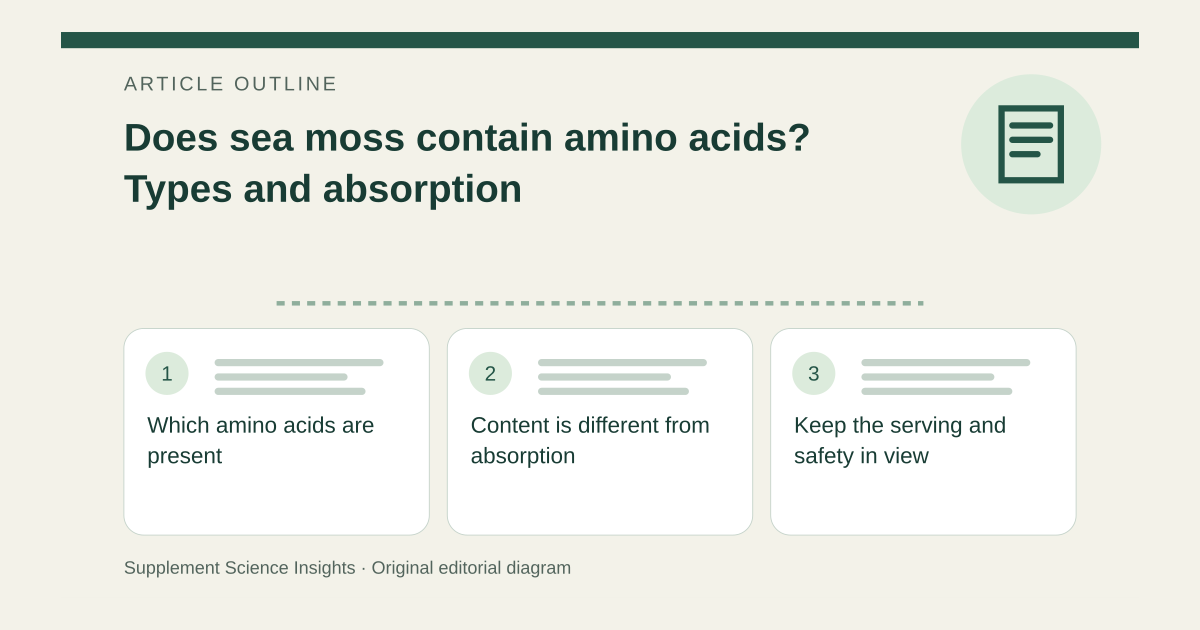
Which amino acids are present
The seaweed-protein review lists Chondrus crispus profiles containing essential amino acids such as leucine, lysine and threonine, alongside others including glutamic acid, alanine and glycine. These analyses describe defined samples; products sold as sea moss may use different species or mixed ingredients. [1]
Content is different from absorption
Seaweed cell-wall components can limit access to protein. The risk-benefit review distinguishes laboratory digestibility from human absorption, so its in-vitro estimates should not be presented as the percentage every person absorbs. A dry-weight composition table also cannot be applied directly to a diluted gel. [2]
Keep the serving and safety in view
Imagine a gel serving lists very little protein. The presence of many amino-acid types does not turn it into a substantial protein supplement. Seaweeds can also contain variable iodine and contaminants, so assess the product and total diet rather than pursuing an impressive amino-acid list alone. [2]
| Detail | Meaning |
|---|---|
| Dry seaweed analysis | Not gel serving content |
| Amino-acid variety | Not necessarily much protein |
| Laboratory digestibility | Not a personal absorption rate |
Sources for this article
- Seaweed-Derived Proteins and Peptides: Promising Marine Bioactives - PMC
Source consulted: 2026-09-21. This is a reference resource, not a claim that we conducted the studies or tested a product. - Risks and benefits of consuming edible seaweeds - PMC
Source consulted: 2026-09-21. This is a reference resource, not a claim that we conducted the studies or tested a product.