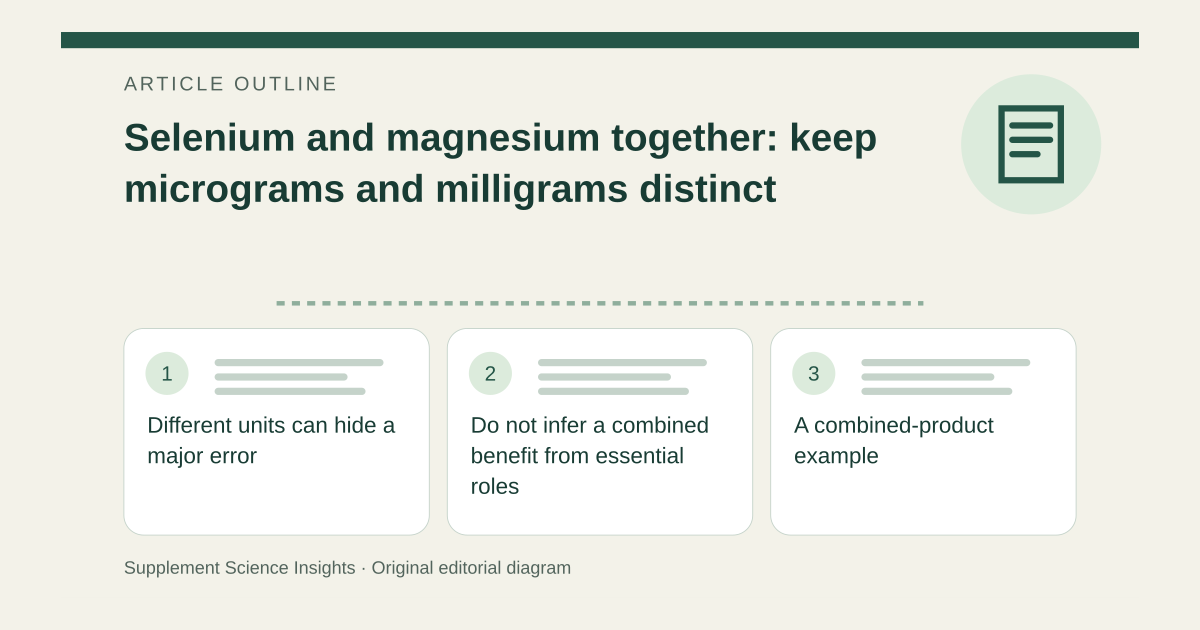
Different units can hide a major error
Selenium is commonly expressed in micrograms, while magnesium is commonly expressed in milligrams. One milligram equals 1,000 micrograms. Comparing the bare numbers without units can therefore produce a large dosing mistake. Read each nutrient line separately rather than assuming the minerals should be supplied in similar numbers. [1][2]
Do not infer a combined benefit from essential roles
Both nutrients are required, but that does not prove that their supplements work better together for someone whose intake is adequate. The ODS summaries describe nutrient-specific functions and safety issues, not a universal synergistic dosing plan. Selenium excess can cause hair and nail changes and other toxicity symptoms. [1]
A combined-product example
Imagine a multi contains selenium and a mineral blend adds more. The additional magnesium does not cancel the duplicated selenium. Record both totals, keeping units visible, and review any kidney disease or medication interactions relevant to magnesium. Symptoms after starting a product need assessment rather than an automatic increase of the other mineral. [1][2]
| Illustrative situation | Relevant distinction |
|---|---|
| 100 mcg selenium | 0.1 mg, not 100 mg |
| Selenium in two products | Add both contributions |
| Magnesium added | Does not prevent selenium toxicity |
Sources for this article
- Selenium - Health Professional Fact Sheet
Source consulted: 2026-09-20. This is a reference resource, not a claim that we conducted the studies or tested a product. - Magnesium - Health Professional Fact Sheet
Source consulted: 2026-09-20. This is a reference resource, not a claim that we conducted the studies or tested a product.