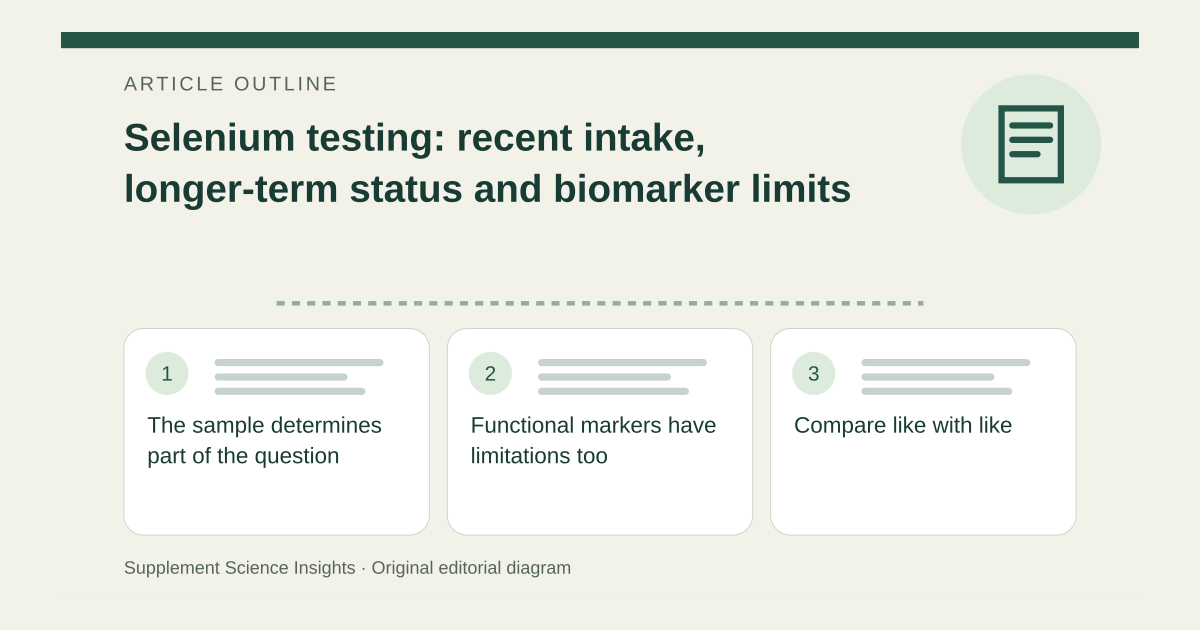
The sample determines part of the question
ODS describes plasma and serum selenium as commonly used measures. Plasma, serum and urine concentrations tend to reflect recent intake, while whole blood, which includes red blood cells, provides information about longer-term status. [1]
Hair and nail selenium can be used to examine longer-term intake over months or years. That does not make any commercial hair result a complete diagnosis or mean its value can be compared directly with a serum reference interval. [1]
Functional markers have limitations too
Glutathione peroxidase 3 and selenoprotein P are selenium-containing proteins used as functional biomarkers. Their concentrations can also be affected by inflammation and oxidative stress, complicating interpretation. [1]
ODS notes that supplementation does not necessarily increase these markers in people who are already selenium sufficient. More selenium in a product therefore need not produce a proportionally larger functional response. [1]
Compare like with like
Imagine a person compares a nail-analysis value with a serum result from an online article and concludes that their status is abnormal. The specimens, units and periods represented are different.
The laboratory method and its reference information should remain attached to the result. A clinician also needs the supplement history and reason the test was requested.
| Item | Meaning |
|---|---|
| Serum or plasma | Often reflects recent intake |
| Whole blood | Can reflect longer-term status |
| Functional protein marker | May also change with inflammation |
A test is one part of an assessment
Bring the exact result, specimen, units, collection date and products used. A recent intake change can matter when interpreting a marker that reflects recent exposure. [1]
This overview does not provide a universal diagnostic cutoff or recommend routine screening. It explains why exposure, laboratory measurement and clinically important deficiency or excess are related but separate findings. [1]
Sources for this article
- NIH ODS — Selenium: Health Professional Fact Sheet
Source consulted: 2026-09-17. This is a reference resource, not a claim that we conducted the studies or tested a product.