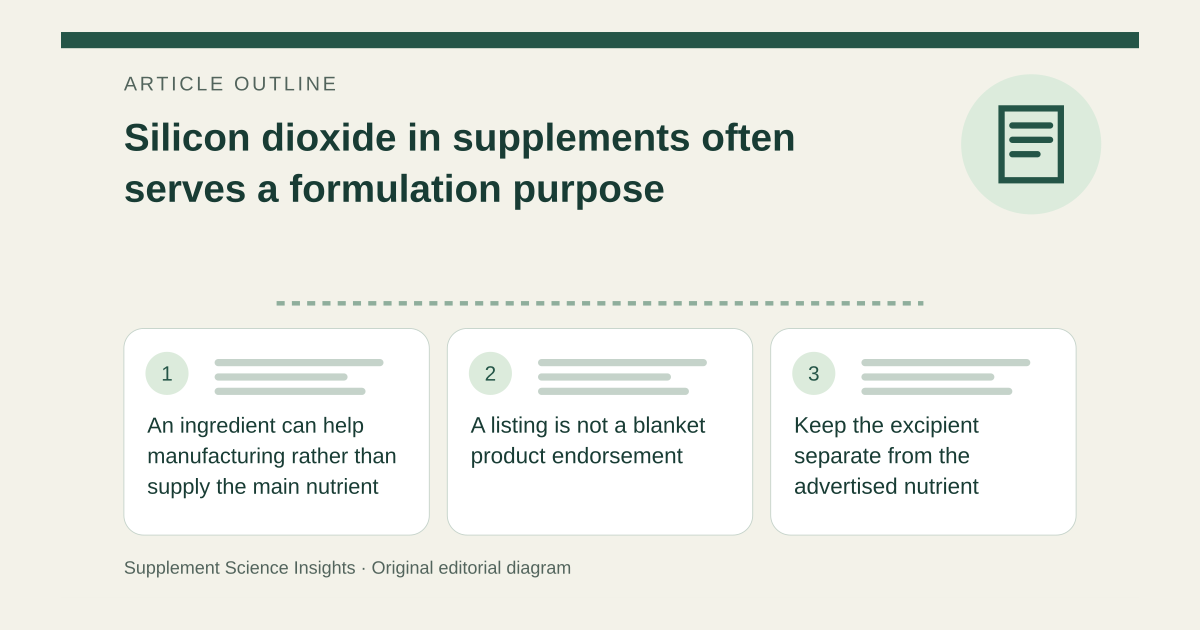
An ingredient can help manufacturing rather than supply the main nutrient
FDA’s food-substance database lists silicon dioxide as an anticaking or free-flow agent, among other technical uses. This explains why it can appear in the formulation of a powdered or tableted product. [1]
The database describes physical and technical functions. It does not identify the amount or exact role in every particular supplement. [1]
A listing is not a blanket product endorsement
Check the complete label and manufacturer information if the intended use or form is unclear. Colloidal silicon dioxide wording does not turn an excipient into evidence of a bone, skin or other health benefit. [1]
A database entry also should not be treated as approval of unlimited amounts or all routes of exposure. Ingredient identity, intended use and applicable conditions remain relevant. [1]
Keep the excipient separate from the advertised nutrient
Imagine a tablet lists silicon dioxide among other ingredients. That listing alone cannot be used to calculate a supplemental silicon dose or claim a therapeutic effect.
| Detail | Interpretation |
|---|---|
| Silicon dioxide | Ingredient identity |
| Anticaking role | Technical function |
| Health benefit | Not established by the listing |
Sources for this article
- Substances Added to Food <em>(formerly EAFUS)</em>
Source consulted: 2026-09-18. This is a reference resource, not a claim that we conducted the studies or tested a product.