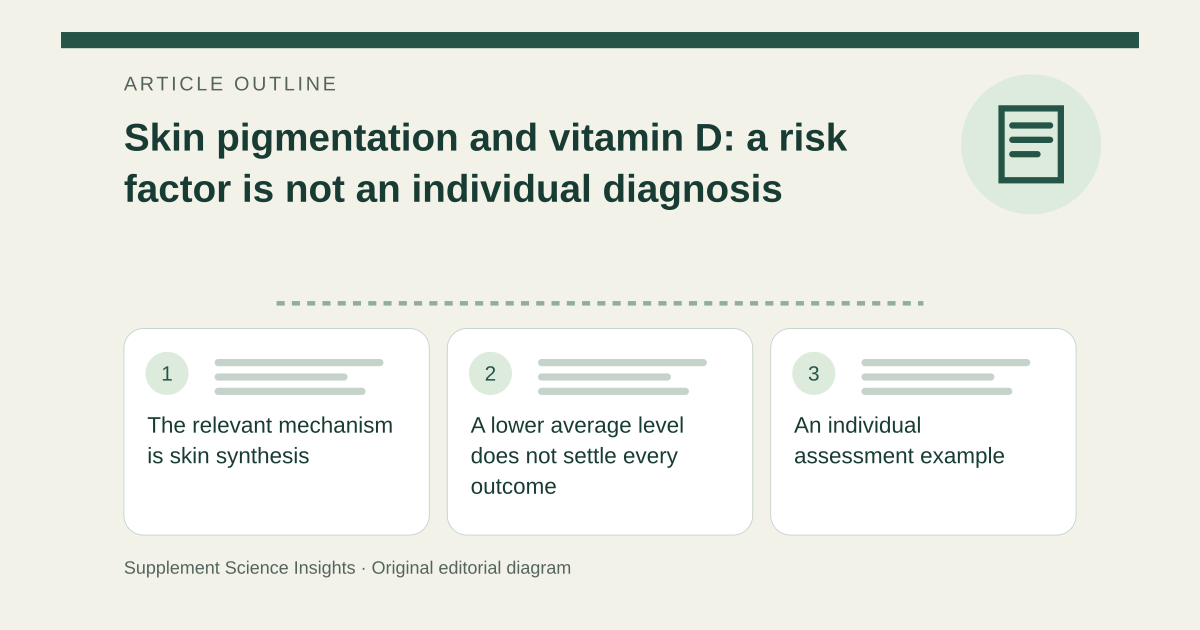
The relevant mechanism is skin synthesis
NIH ODS explains that greater epidermal melanin reduces the skin’s ability to produce vitamin D from sunlight. Black Americans on average have lower serum 25(OH)D than White Americans in the evidence summarized. That population observation does not describe every person or make racial identity a substitute for assessing diet, exposure and medical history. [1]
A lower average level does not settle every outcome
ODS notes uncertainty about the health consequences of lower concentrations in people with darker skin. It also reports lower fracture and osteoporosis rates in African Americans than in White Americans despite the concentration difference. A single biomarker comparison should not be converted into a blanket prediction of disease or a universal racial dosing rule. [1]
An individual assessment example
Imagine two people with similar skin pigmentation have different diets, medicines, outdoor exposure and gastrointestinal histories. Their needs may differ. Vitamin D advice should use the individual context; unprotectedUV exposure is not a precise dosing strategy, and skin protection remains relevant. [1]
| Hypothetical information | What it establishes |
|---|---|
| Darker pigmentation | One factor affecting skin synthesis |
| A population average | Not an individual diagnosis |
| Symptoms or clinical risk | Reason for appropriate individual assessment |
Sources for this article
- Vitamin D - Health Professional Fact Sheet
Source consulted: 2026-09-20. This is a reference resource, not a claim that we conducted the studies or tested a product.