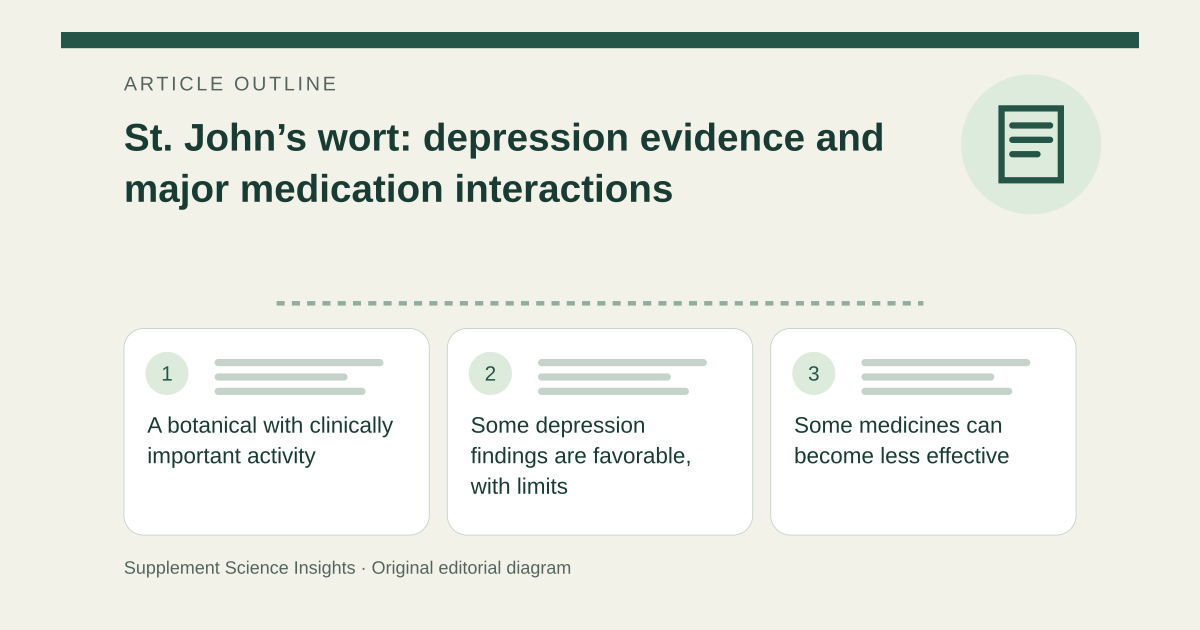
A botanical with clinically important activity
St. John’s wort, Hypericum perforatum, is studied and marketed primarily for mood-related symptoms. The exact extract and formulation matter, as they do for other botanical interventions. A product labeled natural is not thereby pharmacologically inactive. [1]
For this ingredient, interactions are central to the assessment. A reader's current medicines, contraceptive use and treatment history cannot be separated from a proposed benefit claim. This reference explains the evidence; it does not provide a self-treatment or medication-switching protocol. [1]
Some depression findings are favorable, with limits
NCCIH reports evidence that St. John’s wort can outperform placebo and perform similarly to standard antidepressants in mild or moderate depression. Effectiveness in severe depression and over longer periods is less certain. [1]
These findings concern specified preparations and trial populations. They should not be generalized to every mood complaint or every retail product. Research for other promoted uses is limited and does not establish a broad benefit. A clinical diagnosis, symptom severity and current treatment remain relevant to interpreting applicability. [1]
Some medicines can become less effective
St. John’s wort can weaken the effects of many medicines, including oral contraceptives, transplant medicines, some seizure treatments, certain HIV and cancer drugs, warfarin and some cardiovascular medicines. These interactions can have serious consequences. [1]
Combining it with certain antidepressants or other medicines affecting serotonin can also produce serious serotonin-related adverse effects. A supplement-only shopping comparison misses this crucial context. A pharmacist or treating clinician should assess the entire medication list before any change involving this ingredient. [1]
Other adverse effects still matter
Reported effects include dizziness, gastrointestinal symptoms, restlessness and trouble sleeping. Substantial exposure or topical application can increase the risk of severe skin reactions after sun exposure. Pregnancy use may be unsafe, and adverse effects have been reported in breastfed infants. [1]
Do not interpret a short-term tolerability result in people taking no medicines as reassurance for someone using interacting treatment. The trial's exclusions are part of its safety evidence and should remain visible in a summary. [1]
Eligibility criteria can change applicability
Imagine a fictional depression trial excludes participants taking interacting medicines. A reader taking a transplant medicine is outside that trial's relevant safety conditions, even if their symptom score resembles the study group's score.
Matching one characteristic does not cancel a material difference in treatment context. The example does not recommend stopping a prescribed medicine or substituting an herbal product.
| Hypothetical match | Remaining limitation |
|---|---|
| Similar symptom score | Only one characteristic |
| Interacting medicine present | Different safety context |
| Trial excluded that medicine | Do not assume applicability |
Treatment context belongs before a product choice
A potentially effective ingredient can still be inappropriate because of interactions. This overview does not recommend starting, stopping or combining depression treatments. Use the evidence as a basis for an informed clinical discussion that includes every medicine and supplement.
Sources for this article
- NCCIH — St. John’s wort: Usefulness and Safety
Source consulted: 2026-09-17. This is a reference resource, not a claim that we conducted the studies or tested a product.