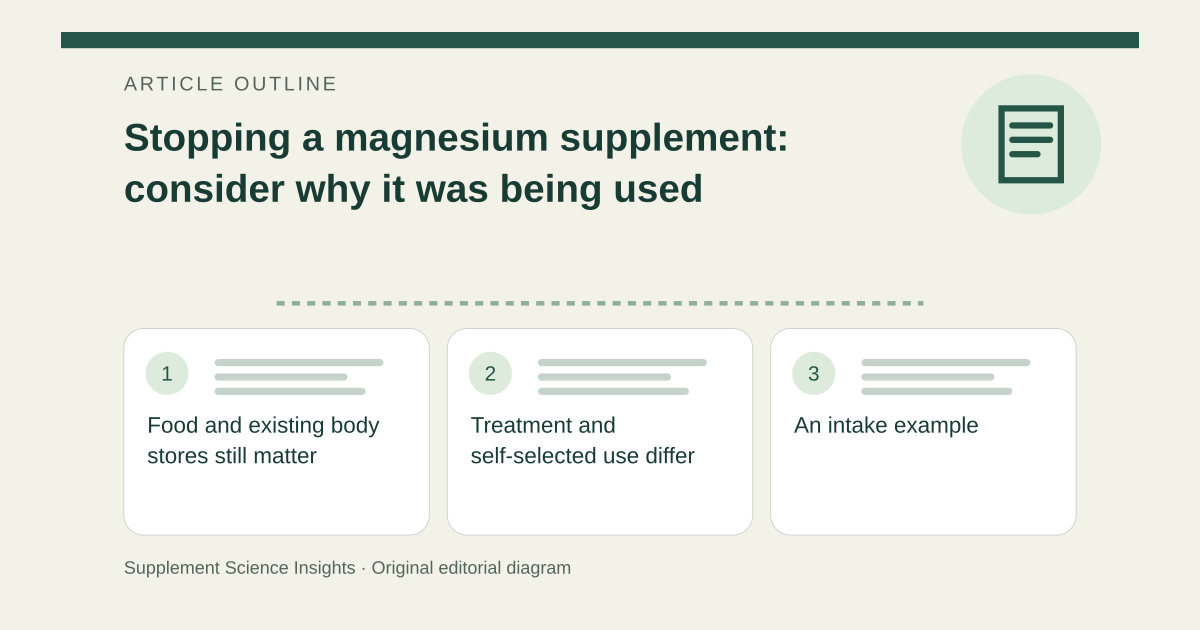
Food and existing body stores still matter
Magnesium is obtained from foods and regulated through absorption and kidney handling. Stopping a supplement removes that source; it does not instantly remove all magnesium from the body. Whether intake becomes inadequate depends on meals, losses, medical conditions and the reason supplementation began. [1]
Treatment and self-selected use differ
If magnesium was prescribed for a documented problem, discuss stopping or changing it with the treating clinician. If a self-selected product caused diarrhea or other adverse effects, reviewing it is appropriate. Returning symptoms do not alone prove dependence: the original issue may remain, or another cause may need assessment. [1]
An intake example
Imagine food supplies 280 mg daily and a supplement adds 100 mg. Removing it changes the estimated total from 380 to 280 mg. That is an intake calculation, not a prediction of when deficiency or symptoms will appear. A citrate laxative also has a bowel effect distinct from its nutritional contribution, so its discontinuation needs the relevant bowel-care context. [1][2]
| Hypothetical situation | What changes |
|---|---|
| 280 mg food +100 mg supplement | 380 mg estimated total |
| Supplement removed | 280 mg estimated total |
| Diagnosed deficiency or laxative treatment | Review the original treatment purpose |
Sources for this article
- Magnesium - Health Professional Fact Sheet
Source consulted: 2026-09-20. This is a reference resource, not a claim that we conducted the studies or tested a product. - Magnesium Citrate: MedlinePlus Drug Information
Source consulted: 2026-09-20. This is a reference resource, not a claim that we conducted the studies or tested a product.