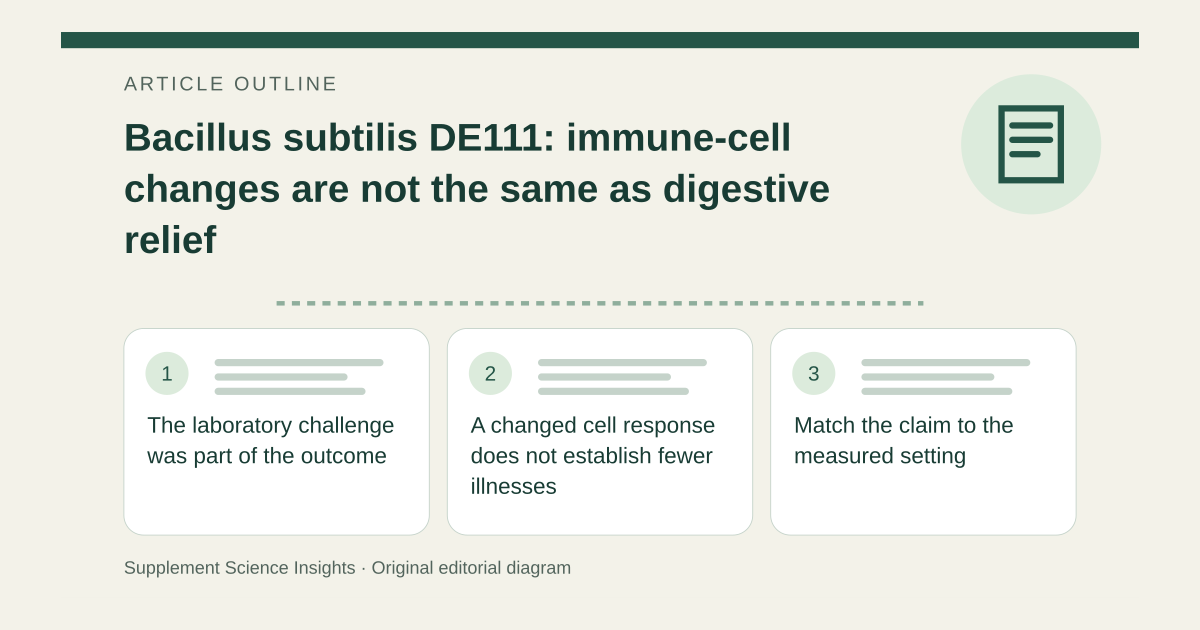
The laboratory challenge was part of the outcome
The trial randomized 46 healthy adults to DE111 or placebo for four weeks; 44 completed it. Researchers collected blood cells and tested their response to a bacterial stimulus outside the body. [1]
Some anti-inflammatory immune-cell populations increased in that laboratory response. Overall perceived gastrointestinal health, the microbiota and several measured inflammation or gut-barrier markers were largely unaffected. [1]
A changed cell response does not establish fewer illnesses
The study did not demonstrate prevention of infections, treatment of IBS or a general improvement in digestive function. The authors regarded the pilot as grounds for a larger, adequately powered study. [1]
Deerland Enzymes and Probiotics funded the work and supplied treatment-related materials. One investigator later joined its scientific advisory council. The report described the funder’s limited roles, but independent replication remains useful when interpreting a small commercially supported study. [1]
Match the claim to the measured setting
Imagine cells respond differently after being removed from participants and stimulated in a laboratory. That result cannot be restated as proof that participants experienced fewer infections.
| Detail | Interpretation |
|---|---|
| 46 randomized | 44 completed |
| Four weeks | Pilot duration |
| Ex vivo response | Not an illness-prevention endpoint |
Sources for this article
- Examining the Gastrointestinal and Immunomodulatory Effects of the Novel Probiotic Bacillus subtilis DE111 - PMC
Source consulted: 2026-09-19. This is a reference resource, not a claim that we conducted the studies or tested a product.