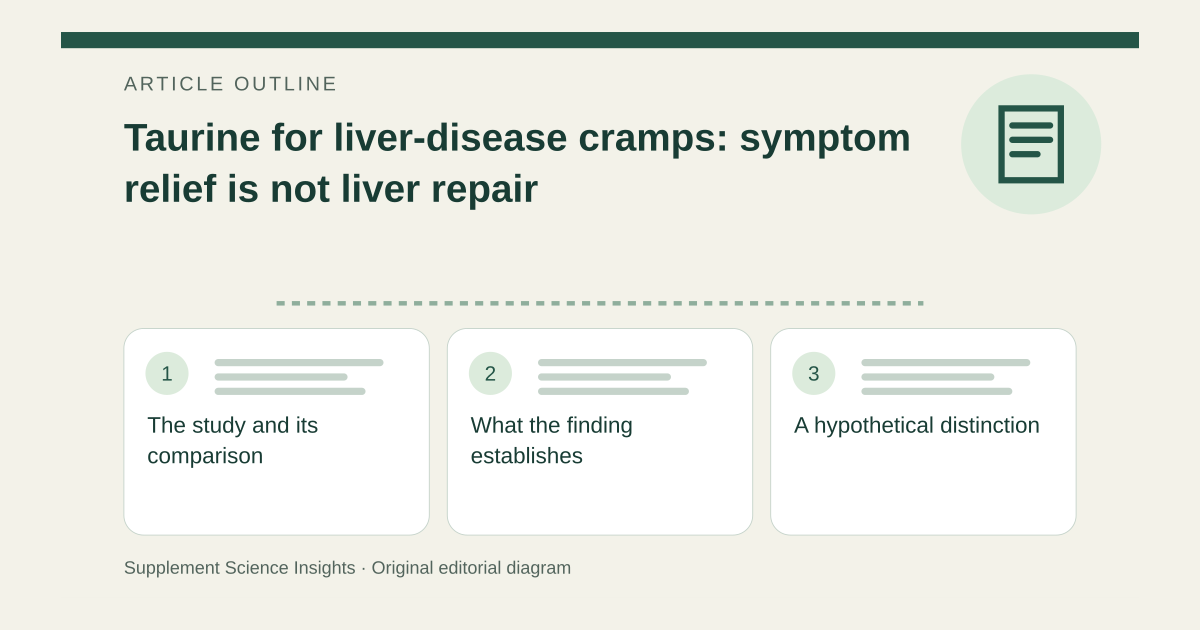
The study and its comparison
Forty-nine people with chronic liver disease and frequent cramps enrolled; 30 completed the protocol and entered the final analysis. Participants received taurine and placebo in separate four-week periods. [1]
At 2 grams daily, taurine reduced reported cramp frequency, duration and severity compared with placebo. Those outcomes concern an associated symptom, not reversal of cirrhosis or improved survival. [1]
What the finding establishes
Nineteen enrolled participants were excluded from analysis because outcome data were missing. Their absence limits confidence that the same benefit applies to everyone enrolled. Short-term tolerability does not establish indefinite safety. Funding and conflicts were not established from the abstract. Treatment decisions in liver disease require the existing care context. [1]
A hypothetical distinction
Imagine cramps lessen while liver scarring is not assessed. Calling that result liver regeneration would change the endpoint.
| Detail | Interpretation |
|---|---|
| Measured outcome | Keep the endpoint specific |
| Study preparation | Not every retail product |
| Remaining uncertainty | Not resolved by a mechanism |
Sources for this article
- Randomised clinical trial: oral taurine supplementation versus placebo reduces muscle cramps in patients with chronic liver disease - PubMed
Source consulted: 2026-09-19. This is a reference resource, not a claim that we conducted the studies or tested a product.