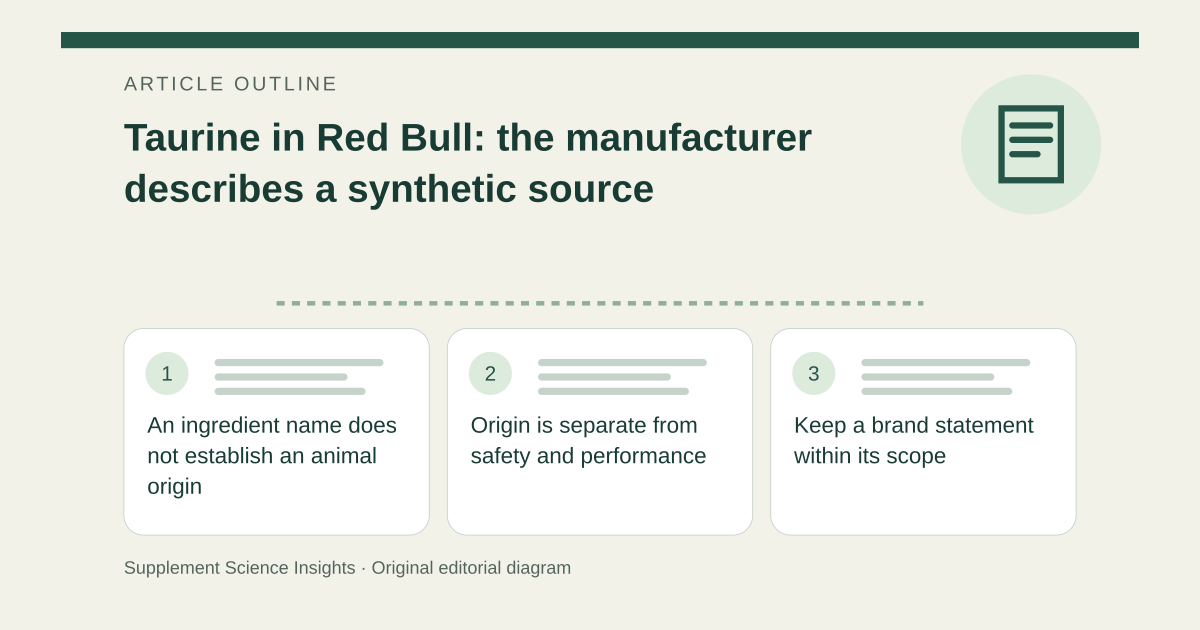
An ingredient name does not establish an animal origin
The company’s FAQ directly rejects the claim that its taurine comes from bulls. Its explanation identifies synthetic production for the ingredient used in its products. [1]
This supports reporting the stated source for that brand. It should not be turned into an unsupported statement about the manufacturing method used by every supplier or every drink on the market. [1]
Origin is separate from safety and performance
A synthetic origin does not, by itself, prove superior purity, a health benefit or suitability for a particular person. Those are different claims requiring different evidence. [1]
Likewise, confirming one ingredient’s source does not evaluate all the other ingredients, the serving size or the finished drink’s effects. This article is a sourcing clarification, not a recommendation to consume the product. [1]
Keep a brand statement within its scope
Imagine a reader uses Red Bull’s answer to certify a different brand’s taurine source. That inference goes beyond the statement. The other product would need its own reliable sourcing information.
| Detail | Interpretation |
|---|---|
| Red Bull statement | Synthetic taurine source |
| Other brands | Need their own evidence |
| Origin | Not a safety or efficacy test |
Sources for this article
- Red Bull manufacturer FAQ — source of taurine
Source consulted: 2026-09-17. This is a reference resource, not a claim that we conducted the studies or tested a product.