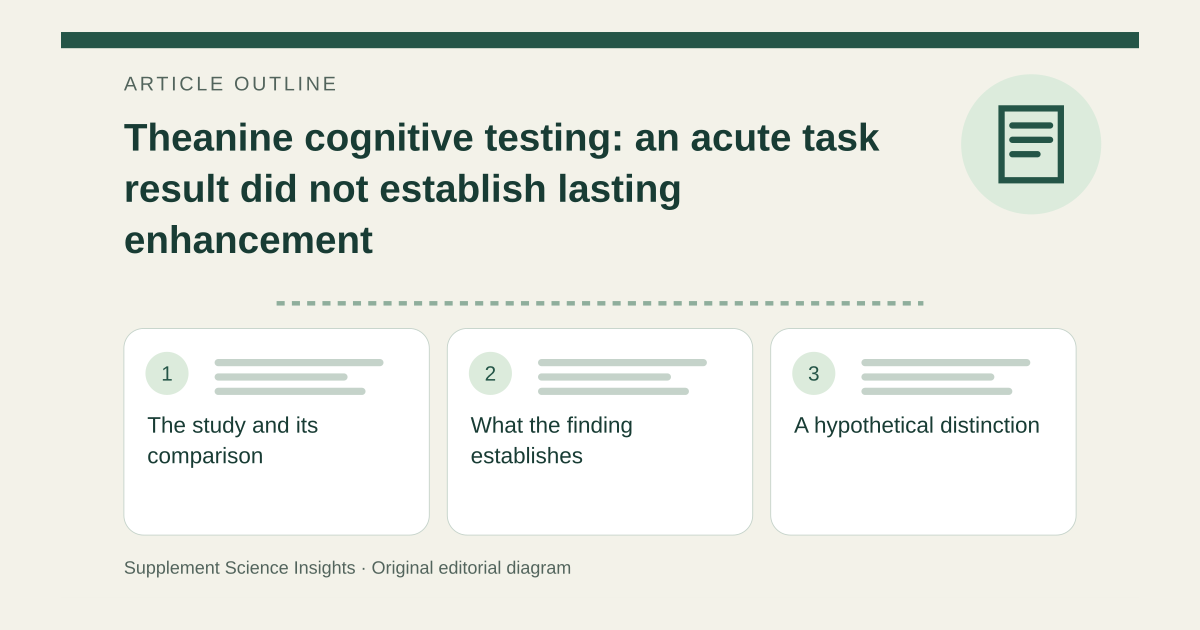
The study and its comparison
Japanese adults aged 50–69 with self-reported cognitive decline underwent placebo-controlled testing after a single dose and after 12 weeks of intake. Fifty participants were included in the final analysis. [1]
Single-dose findings favored theanine on certain attention and working-memory tasks. The global MMSE-J score did not differ between groups, and the reported task advantages did not establish a sustained broad benefit at 12 weeks. [1]
What the finding establishes
Multiple tests create several opportunities for positive findings. These results should not be described as dementia prevention or universal nootropic efficacy. Several authors were affiliated with ITO EN; the paper reported no directly relevant conflicts. A changed reaction time is a narrower outcome than everyday independence. [1]
A hypothetical distinction
Imagine one task becomes faster while the overall assessment is unchanged. The task result should retain its original scope.
| Detail | Interpretation |
|---|---|
| Measured outcome | Keep the endpoint specific |
| Study preparation | Not every retail product |
| Remaining uncertainty | Not resolved by a mechanism |
Sources for this article
- Effects of l-Theanine on Cognitive Function in Middle-Aged and Older Subjects: A Randomized Placebo-Controlled Study - PMC
Source consulted: 2026-09-19. This is a reference resource, not a claim that we conducted the studies or tested a product.