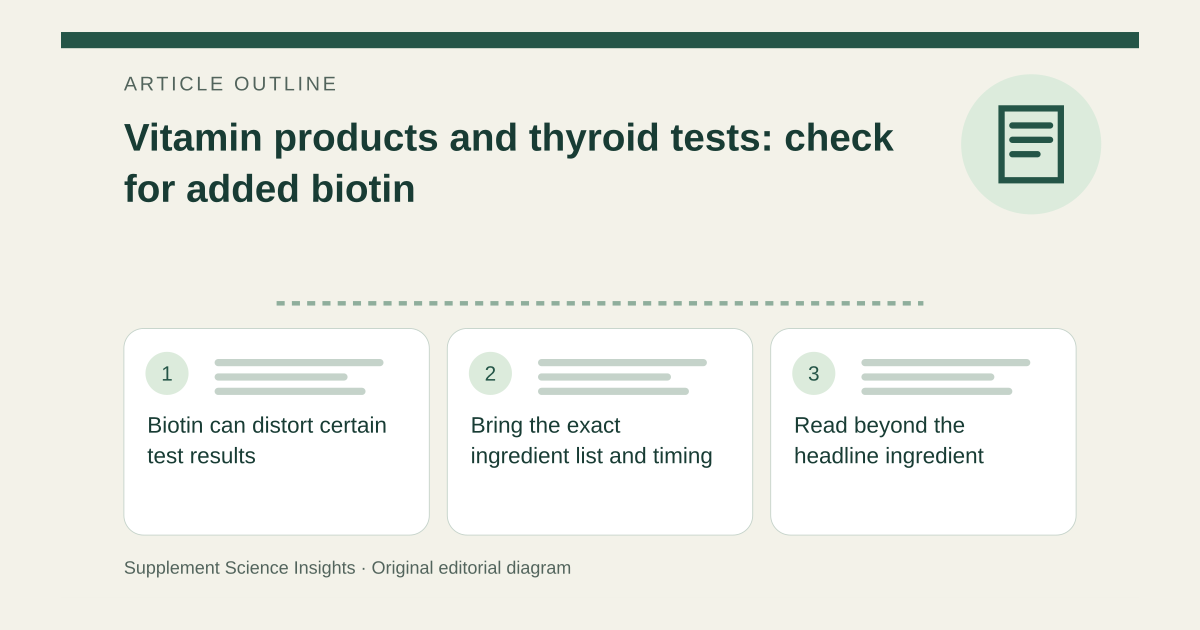
Biotin can distort certain test results
NIH ODS describes interference from high biotin intake in assays using biotin–streptavidin technology, including some thyroid hormone tests. Depending on the test, a result can be falsely high or low. [1]
This is a measurement problem and does not necessarily mean the supplement has changed thyroid function. Not all laboratory methods are equally susceptible. [1]
Bring the exact ingredient list and timing
Tell the ordering clinician and laboratory which products were taken, their biotin amounts and when they were last used. The appropriate preparation or repeat-testing plan depends on the assay and exposure. [1]
This mechanism does not establish that B12 itself or collagen itself caused an abnormal result. It also does not justify a universal supplement stopping interval or stopping prescribed treatment without instructions. [1]
Read beyond the headline ingredient
Imagine a B12-branded blend also contains a large amount of biotin. Reporting only B12 leaves out a potentially relevant source of assay interference. Provide the full label when the thyroid result is reviewed.
| Detail | Interpretation |
|---|---|
| Front label | May omit relevant context |
| Added biotin | Potential assay interference |
| Abnormal result | Needs method and clinical review |
Sources for this article
- Biotin - Health Professional Fact Sheet
Source consulted: 2026-09-17. This is a reference resource, not a claim that we conducted the studies or tested a product.