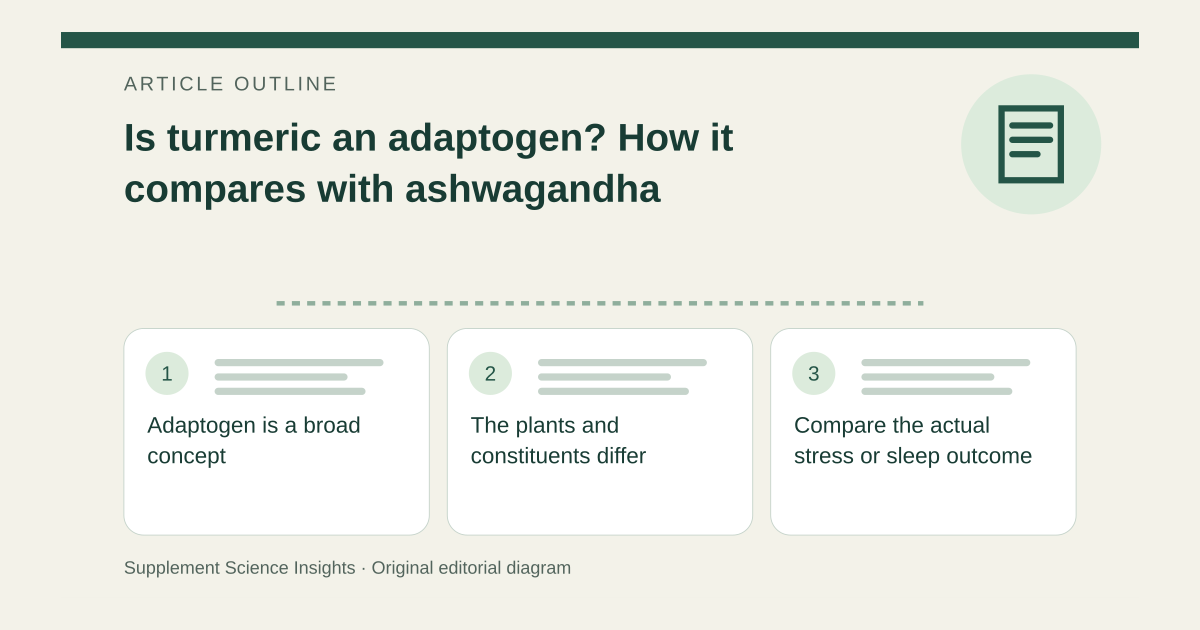
Adaptogen is a broad concept
NIH ODS describes an adaptogen as a loosely defined substance proposed to improve resilience to different stressors. It is not a standardized measure of benefit, a diagnosis or proof that a supplement normalizes every hormone. Calling turmeric adaptogenic does not substitute for a study of the desired outcome. [1]
The plants and constituents differ
Turmeric is a Curcuma longa rhizome spice associated with curcuminoids. Ashwagandha is Withania somnifera, commonly sold as root or root-and-leaf extracts containing withanolides. Their extract names, constituent amounts and doses cannot be exchanged milligram for milligram. [2][3]
Compare the actual stress or sleep outcome
NCCIH finds that some ashwagandha preparations may help stress and insomnia, while anxiety evidence remains unclear. Turmeric research spans other conditions and does not create the same evidence profile merely through a shared marketing label. Neither label establishes a universal treatment for persistent anxiety or fatigue. [3][2]
The cautions are not the same
Ashwagandha has pregnancy, thyroid, autoimmune and medication-related cautions, along with reported liver injury. Turmeric supplements can cause gastrointestinal effects and some enhanced forms have also been associated with liver injury. Combining them is not automatically safer or more effective than selecting care for a specific problem. [3][2]
Choose the question before the category
Imagine choosing between two products because both say stress resilience. First identify whether the goal is sleep, worry or another symptom, then examine the relevant preparation and medical context. The adaptogen label alone cannot make that decision. [1][3]
| Feature | Turmeric | Ashwagandha |
|---|---|---|
| Plant | Curcuma longa | Withania somnifera |
| Common constituent focus | Curcuminoids | Withanolides |
| Stress label | Not clinical proof | Some preparation-specific research |
| Safety review | GI/liver and product context | Thyroid/autoimmune and other cautions |
Sources for this article
- Ashwagandha: Is it helpful for stress, anxiety, or sleep? - Health Professional Fact Sheet
Source consulted: 2026-09-21. This is a reference resource, not a claim that we conducted the studies or tested a product. - Turmeric: Usefulness and Safety | NCCIH
Source consulted: 2026-09-21. This is a reference resource, not a claim that we conducted the studies or tested a product. - Ashwagandha: Usefulness and Safety | NCCIH
Source consulted: 2026-09-21. This is a reference resource, not a claim that we conducted the studies or tested a product.