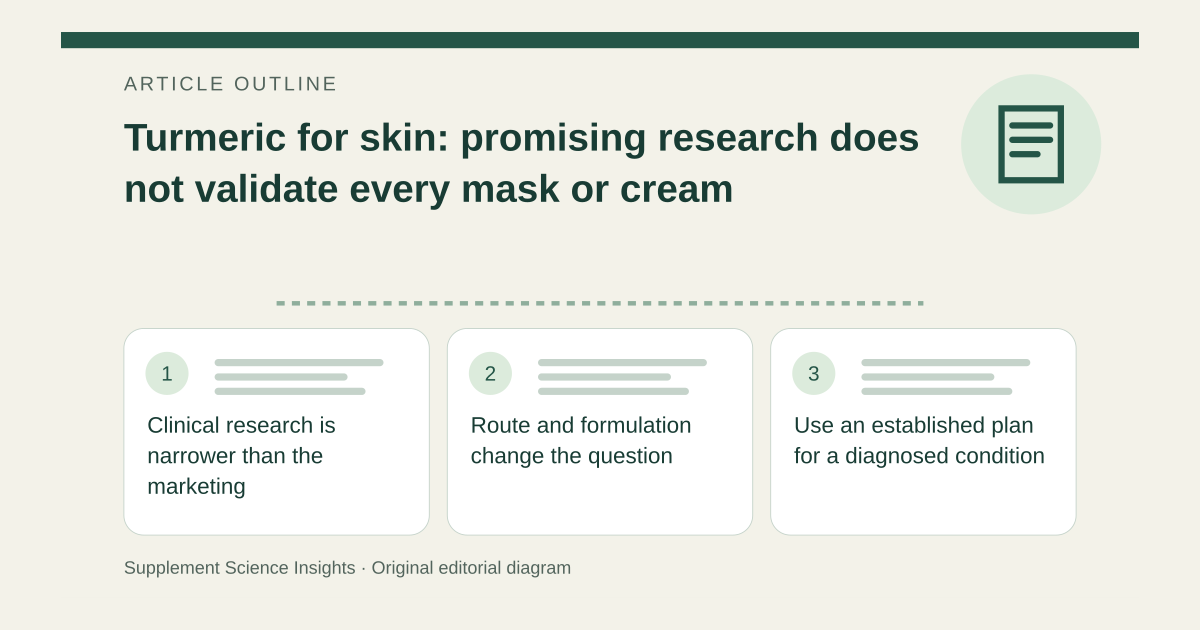
Clinical research is narrower than the marketing
A systematic review searching through July 2023 identified 18 randomized trials across several dermatologic conditions. Its recommendations varied by condition, and the authors called for larger studies and clearer treatment parameters. That review is not a trial of every retail turmeric product or a guarantee of improved skin for healthy users. [1]
Route and formulation change the question
A swallowed extract is not the same intervention as a rinse-off soap or a leave-on mask. NCCIH emphasizes differences in turmeric products and notes both oral adverse effects and possible topical itching or hives. Greater absorption does not automatically mean a better benefit-risk balance. [2]
Use an established plan for a diagnosed condition
Acne, psoriasis, irritation and post-inflammatory marks are different problems. A finding in one should not replace a treatment plan for another. AAD describes acne medicines selected for the type and severity of acne; an ingredient’s anti-inflammatory reputation is not an equivalent treatment plan. [3][1]
A reaction is not evidence that the product is working
Wash off a cosmetic product that causes a reaction and discontinue it. AAD recommends testing new skin products on a small area before wider use. That can help identify intolerance but cannot prove therapeutic effectiveness or rule out every later reaction. [4]
Ask whether the product matches the evidence
Imagine a study evaluates a defined cream for one diagnosis while a shop sells a turmeric soap for general radiance. Shared ingredient names do not establish matching concentration, exposure time or outcome. Judge the actual product claim rather than transferring the whole review to the label. [1][2]
| Feature | Why it matters |
|---|---|
| Rinse-off versus leave-on | Exposure differs |
| Specific diagnosis | Outcomes cannot be freely transferred |
| Ingredient reputation | Not finished-product evidence |
Sources for this article
- Evaluation of curcumin for dermatologic conditions: a systematic review.
Source consulted: 2026-09-21. This is a reference resource, not a claim that we conducted the studies or tested a product. - Turmeric: Usefulness and Safety | NCCIH
Source consulted: 2026-09-21. This is a reference resource, not a claim that we conducted the studies or tested a product. - Acne: Diagnosis and treatment
Source consulted: 2026-09-21. This is a reference resource, not a claim that we conducted the studies or tested a product. - How to test skin care products
Source consulted: 2026-09-21. This is a reference resource, not a claim that we conducted the studies or tested a product.