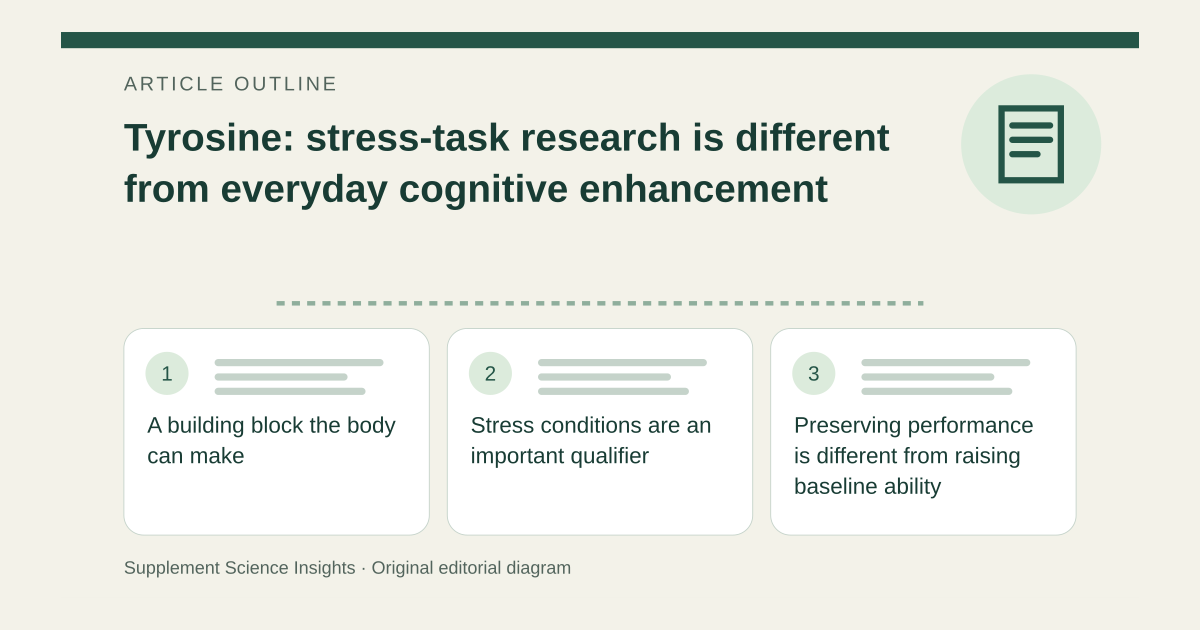
A building block the body can make
L-tyrosine is an amino acid that the body can produce from phenylalanine. It is used in proteins and in pathways involving thyroid hormones and other signaling compounds. It is also present in foods and sold in concentrated supplements. [1]
These normal functions explain why researchers investigate it, but they do not establish routine need for a supplement. A physiological precursor does not automatically improve the outcome when more is supplied, particularly if the pathway is not limited by that precursor. [1]
Stress conditions are an important qualifier
Cleveland Clinic describes research on cognitive performance during demanding or stressful tasks, with much less basis for assuming a general memory improvement at rest. The study conditions should remain attached to a result. [1]
Depression findings are mixed and do not establish a recommended treatment. A plausible neurotransmitter explanation is insufficient to diagnose a deficiency or show that a retail product will improve a mood disorder. The clinical question is more specific than a supplement's focus or motivation label. [1]
Preserving performance is different from raising baseline ability
A study might ask whether a supplement reduces a decline during a difficult task. That is different from demonstrating better performance above a person's normal, rested level. The comparison and starting condition determine which conclusion is justified.
Also distinguish attention, working memory and mood. A favorable result on one task does not establish improvement across all cognitive functions. A product description that blends these endpoints into a general claim can hide both the narrow finding and the outcomes that were unchanged.
Thyroid and medicine context matter
Potential interactions include thyroid-hormone treatment, monoamine oxidase inhibitors and levodopa. A person using these medicines should seek professional assessment rather than starting a supplement from a generic performance recommendation. [1]
A normal biological role is not a safety guarantee for concentrated intake. Review the complete product, especially when tyrosine appears alongside stimulants or other active ingredients. This reference does not recommend using a supplement to alter thyroid function or adjusting prescribed treatment to accommodate it. [1]
Keep the starting condition in the result
Imagine a fictional study finds that a supplement group loses two points during a stressful task while placebo loses five. That may indicate less decline in that experiment. It does not establish that either group improved above its normal baseline.
An accurate headline would describe performance under the specified stress, not a universal increase in intelligence. The numbers are hypothetical and do not predict an effect from tyrosine.
| Hypothetical score change | Interpretation |
|---|---|
| Supplement: −2 points | Decline still occurred |
| Placebo: −5 points | Larger decline |
| Difference under stress | Not above-baseline enhancement |
A narrow cognitive finding should stay narrow
This page does not recommend tyrosine for depression, thyroid problems or routine cognitive enhancement. Ask what task, population and stress condition were studied, and retain medication context. The more precise question is usually more useful than a broad claim about increasing brain chemicals.
Sources for this article
- Cleveland Clinic — L-tyrosine benefits and side effects
Source consulted: 2026-09-17. This is a reference resource, not a claim that we conducted the studies or tested a product.