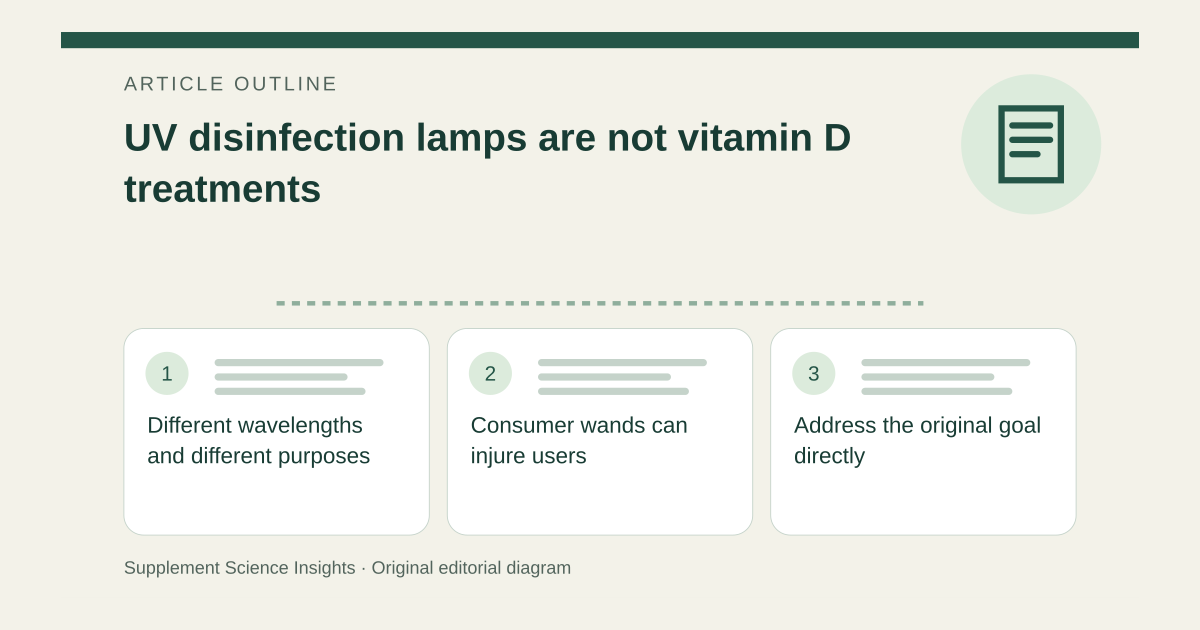
Different wavelengths and different purposes
FDA describes UVC as a disinfectant for air, water and nonporous surfaces. ODS describes vitamin D synthesis in skin in response to UVB. A device marketed to kill microbes is not thereby a vitamin D device, and these radiation types should not be treated as interchangeable. [1][2]
Consumer wands can injure users
FDA found unsafe radiation levels in some marketed UV wands and highlighted missing safety instructions and protections. Claims to disinfect in seconds can be a warning sign of high exposure. Do not aim such a device at skin or look into its light, and do not improvise treatment using a disinfection product. [1]
Address the original goal directly
Imagine someone wants to improve a low vitamin D result and owns a germicidal lamp. The safer relevant discussion is dietary intake and an appropriate supplement plan with a clinician. The lamp’s microbe-killing claim supplies no basis for a skin-exposure schedule. [2][1]
| Concern | Useful distinction |
|---|---|
| UVC disinfection | An equipment use, not self-treatment |
| UVB and vitamin D | A different biological process |
| Low vitamin D | Assess intake and appropriate treatment |
Sources for this article
- Beware of Ultraviolet Wands That Give Off Unsafe Levels of UV Radiation | FDA
Source consulted: 2026-09-20. This is a reference resource, not a claim that we conducted the studies or tested a product. - Vitamin D - Health Professional Fact Sheet
Source consulted: 2026-09-20. This is a reference resource, not a claim that we conducted the studies or tested a product.