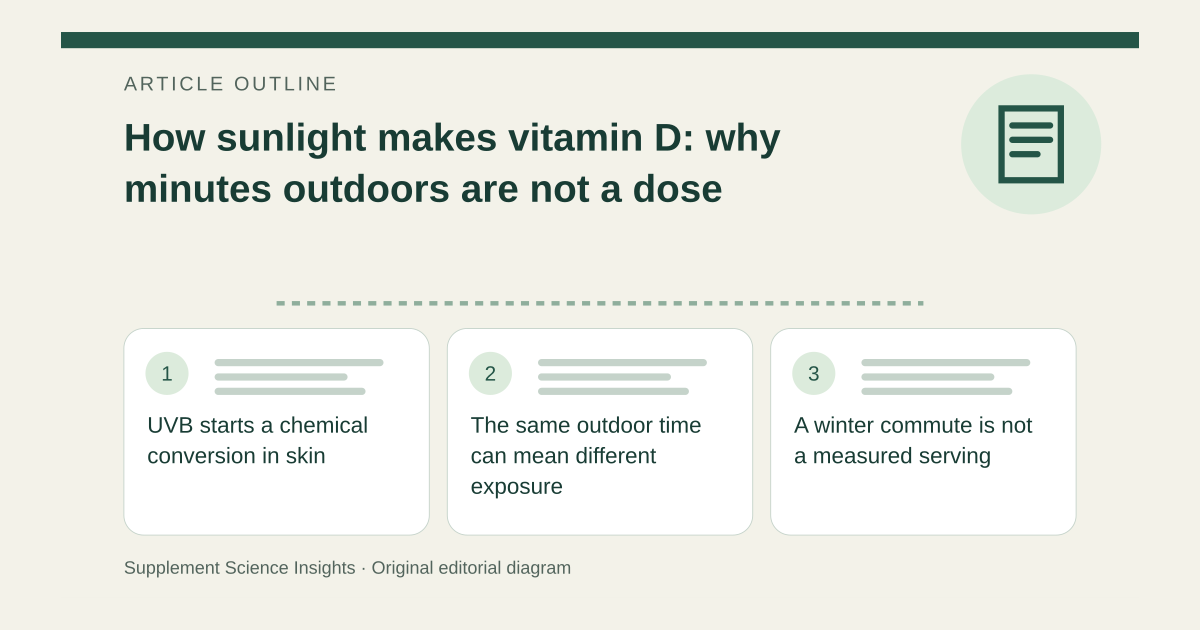
UVB starts a chemical conversion in skin
Ultraviolet B radiation from sunlight converts a cholesterol-related compound in skin into a vitamin D precursor, which becomes vitamin D3. The body then processes vitamin D through the liver and kidneys to produce its active form. Sunlight is the trigger for the skin step, not a source of vitamin D molecules that enter through the skin. [1]
This pathway explains why people can obtain vitamin D without eating it. It does not tell us how much a particular person produces during a particular walk. [1]
The same outdoor time can mean different exposure
Season, time of day, cloud cover, latitude-related conditions, exposed skin and skin pigmentation influence UVB exposure or production. Skin synthesis also declines with age. A fixed number of minutes therefore cannot be treated like a measured supplement amount. [1]
Window glass blocks the UVB needed for this process. Sitting in a bright indoor spot is not equivalent to exposing uncovered skin outdoors. Visible brightness and warmth are not measures of vitamin D-producing UVB. [1]
A winter commute is not a measured serving
Imagine someone spends fifteen minutes outside during a winter commute, mostly covered by clothing, and another person spends the same time outdoors under very different seasonal conditions. The identical duration does not establish equal vitamin D production.
Recording outdoor habits can help describe a risk history. It should not be converted into a precise number of micrograms or subtracted from a supplement amount as though both quantities were measured.
| Observation | Meaning |
|---|---|
| Fifteen minutes in different seasons | UVB exposure can differ |
| Sunlight through a window | Not equivalent to outdoor UVB |
| A supplement amount in micrograms | A different, labeled quantity |
Vitamin D production does not remove UV harm
ODS emphasizes that UV radiation is a carcinogen and that limiting exposure and using sun protection are prudent. Tanning beds should not be treated as a nutrient-delivery strategy. The ability of UVB to trigger vitamin D synthesis does not make an exposure safe. [1]
Food, fortified foods and appropriate supplements provide alternatives that do not require deliberately increasing UV exposure. For infants, ODS reports pediatric advice to keep those younger than six months out of direct sunlight; do not apply an adult outdoor routine to a baby. [1]
Use risk factors without diagnosing from them
Limited sun exposure can contribute to low vitamin D, but it is not a diagnosis. Diet, absorption and clinical conditions also matter. This article does not recommend abandoning sunscreen, prescribe a tanning schedule or establish that everyone with an indoor occupation needs a blood test. [1]
Sources for this article
- NIH ODS — Vitamin D: Health Professional Fact Sheet
Source consulted: 2026-09-17. This is a reference resource, not a claim that we conducted the studies or tested a product.