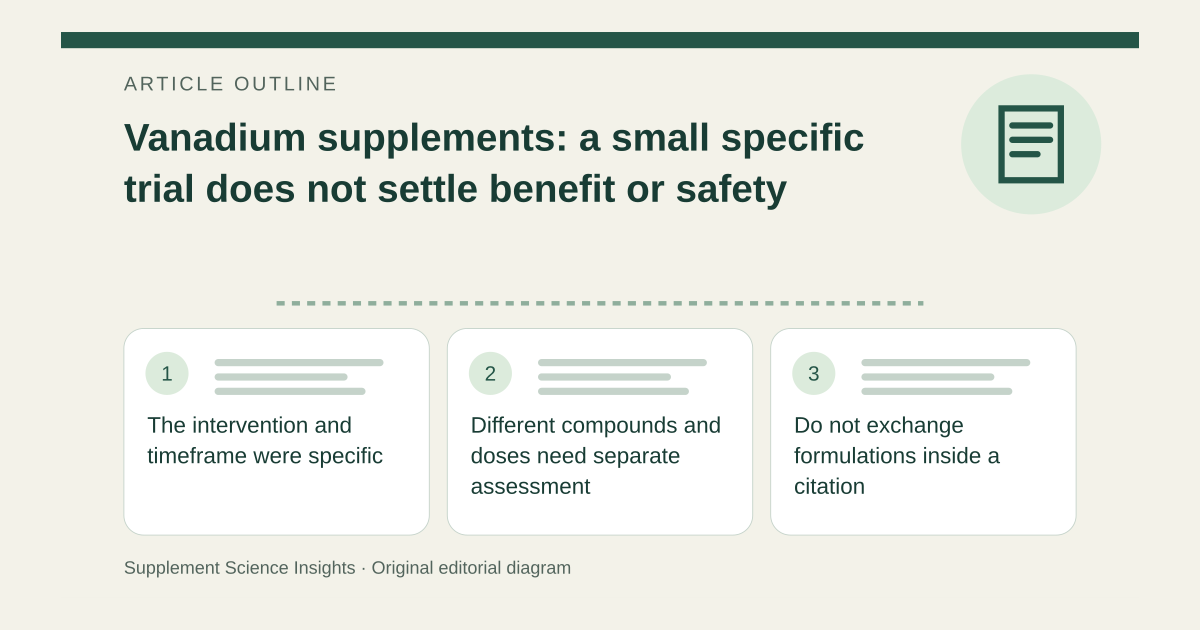
The intervention and timeframe were specific
A 2023 randomized, double-blind trial assigned 44 adults with obesity and type 2 diabetes to vanadium-enriched yeast or placebo for 12 weeks. It reported improvements in glycemic and some anthropometric measures. [1]
It did not find significant improvements in quality of life or lipid profile. The small sample and short duration do not establish durable benefit or uncommon long-term harms. [1]
Different compounds and doses need separate assessment
ATSDR reports nausea, mild diarrhea and stomach cramps in people receiving some vanadium compounds experimentally. Those observations should not be assigned an invented reaction rate for every preparation. [2][1]
Discuss any proposed use with the diabetes care team. The studied yeast product and other vanadium salts are not automatically interchangeable, and a promising abstract is not a reason to stop prescribed treatment. [2][1]
Do not exchange formulations inside a citation
Imagine a vanadyl-sulfate product cites the yeast trial. The citation still needs to address the difference in preparation, exposure and relevant safety evidence.
| Detail | Interpretation |
|---|---|
| Specific yeast trial | 44 adults, 12 weeks |
| Reported benefit | Selected metabolic measurements |
| General supplement recommendation | Not established by one small trial |
Sources for this article
- Insulin Receptor Substrates Regulation and Clinical Responses Following Vanadium-Enriched Yeast Supplementation in Obese Type 2 Diabetic Patients: a Randomized, Double-Blind, Placebo-Controlled Clinical Trial - PubMed
Source consulted: 2026-09-18. This is a reference resource, not a claim that we conducted the studies or tested a product. - PUBLIC HEALTH STATEMENT - Toxicological Profile for Vanadium - NCBI Bookshelf
Source consulted: 2026-09-18. This is a reference resource, not a claim that we conducted the studies or tested a product.