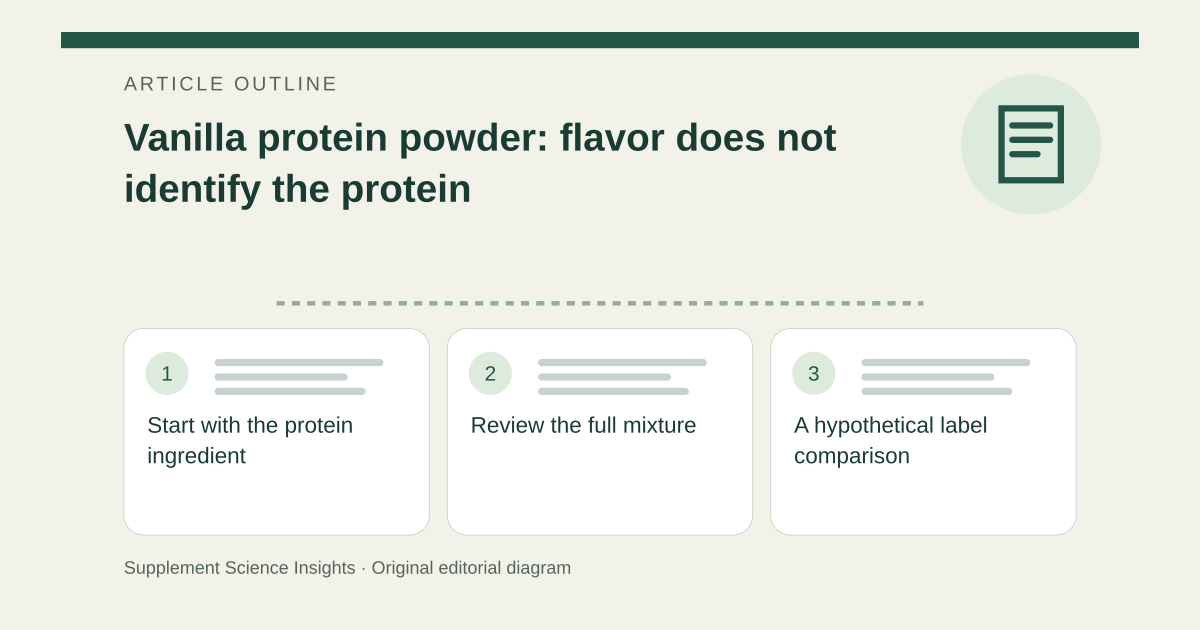
Start with the protein ingredient
A vanilla label does not tell you whether the protein is milk-derived. Identify the listed source first, then the protein grams per serving. Whey and casein come from milk; plant-protein formulations can use other sources. A flavor name cannot establish suitability for lactose intolerance, milk allergy or a vegan diet. [1][2][3]
Review the full mixture
Two vanilla powders can differ in sweeteners, added ingredients, serving weight and declared protein. Compare like amounts rather than assuming that a scoop means the same thing in both. Neither a pleasant flavor nor an isolate label demonstrates that a product has been independently tested for purity. [4][3]
A hypothetical label comparison
Suppose a vanilla whey product provides24 g protein per30 g serving and a vanilla plant blend provides20 g per35 g serving. They share a flavor, not a composition. Record both the protein source and quantity; the better fit depends on dietary needs, tolerability and the reason for use rather than the word vanilla. [4][3]
| Hypothetical vanilla powder | Source | Protein per serving |
|---|---|---|
| A | Whey | 24 g per30 g powder |
| B | Plant blend | 20 g per35 g powder |
Sources for this article
- Whey vs. Casein Protein: Difference Explained | U.S. Dairy
Source consulted: 2026-09-20. This is a reference resource, not a claim that we conducted the studies or tested a product. - Definition & Facts for Lactose Intolerance - NIDDK
Source consulted: 2026-09-20. This is a reference resource, not a claim that we conducted the studies or tested a product. - Dietary Supplements for Exercise and Athletic Performance - Health Professional Fact Sheet
Source consulted: 2026-09-20. This is a reference resource, not a claim that we conducted the studies or tested a product. - How to Understand and Use the Nutrition Facts Label | FDA
Source consulted: 2026-09-20. This is a reference resource, not a claim that we conducted the studies or tested a product.