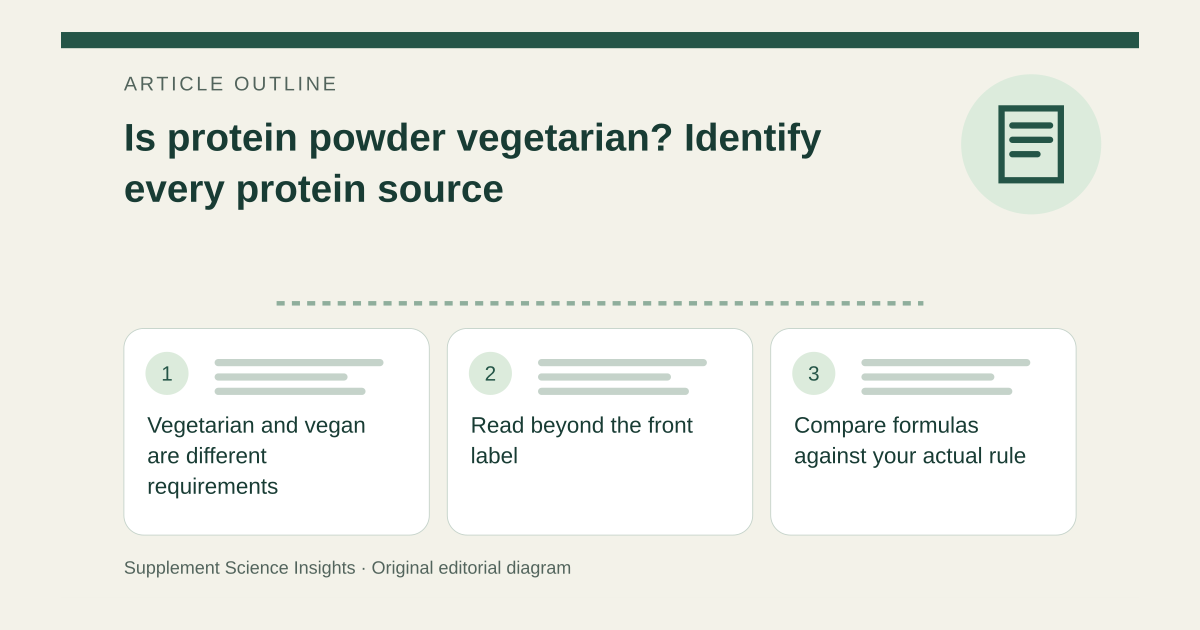
Vegetarian and vegan are different requirements
Whey and casein come from milk. Someone who includes dairy in a vegetarian diet may accept them; someone avoiding all animal-derived ingredients will not. A plant-flavored name, such as vanilla or chocolate, does not identify the source of the protein underneath. [1]
Read beyond the front label
Check the complete ingredient list for every protein source and added ingredient. If a blend includes an ingredient whose origin is unclear, ask the manufacturer about its source and any processing requirement important to you. A vegan claim and a milk-allergy safety claim answer different questions; dietary preference labels should not replace an allergy-specific assessment. [1]
Compare formulas against your actual rule
Imagine one powder lists whey alone and another lists pea protein. The first is dairy-derived; the second names a plant source, but its remaining ingredients still need review. Then compare protein per serving and how the product fits meals. Neither vegetarian status nor a plant name establishes that more powder is needed. [2]
| Hypothetical label | Dietary interpretation |
|---|---|
| Whey protein | Milk-derived; not vegan |
| Casein protein | Milk-derived; not vegan |
| Pea protein blend | Check every remaining ingredient |
Sources for this article
- Whey vs. Casein Protein: Difference Explained | U.S. Dairy
Source consulted: 2026-09-20. This is a reference resource, not a claim that we conducted the studies or tested a product. - Dietary Supplements for Exercise and Athletic Performance - Health Professional Fact Sheet
Source consulted: 2026-09-20. This is a reference resource, not a claim that we conducted the studies or tested a product.