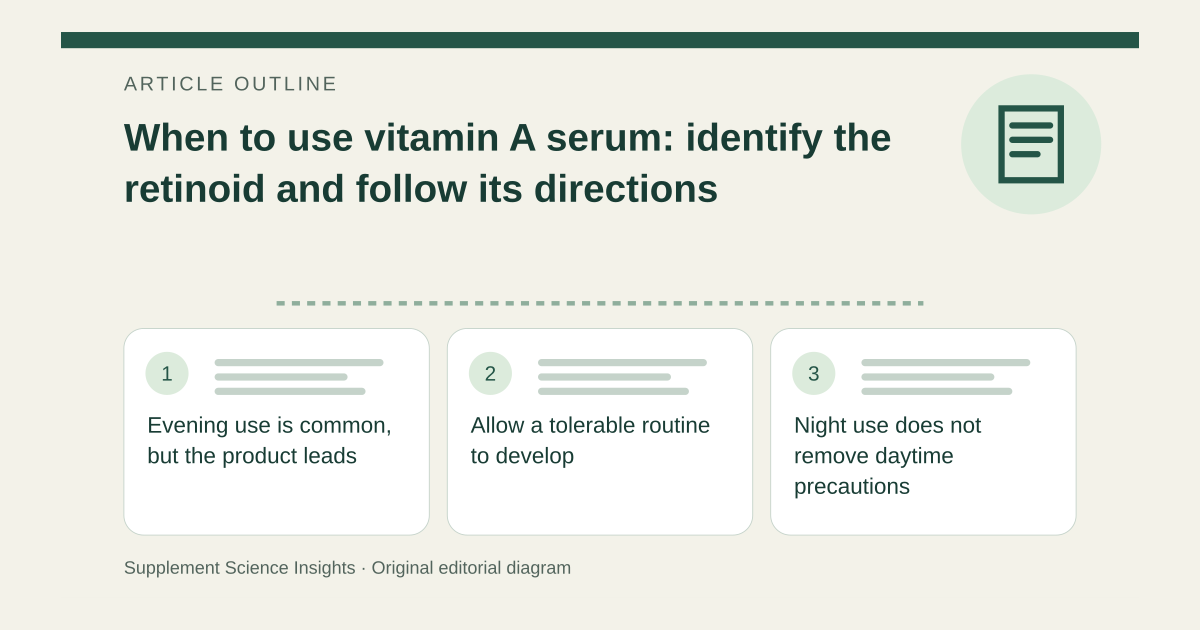
Evening use is common, but the product leads
AAD describes applying a retinoid before bed, while MedlinePlus directs prescribed tretinoin use at bedtime as ordered. Do not copy a prescription’s frequency onto every cosmetic serum. Follow the particular product and clinician’s directions rather than increasing use to speed results. [1][2]
Allow a tolerable routine to develop
Apply to appropriately cleansed skin as directed and use a suitable moisturizer when needed. Dryness, peeling or burning can mean the routine needs adjustment. Adding several strong new products together makes it harder to identify the cause of a reaction. [3][4]
Night use does not remove daytime precautions
Sun protection remains important. AAD advises avoiding retinoids during pregnancy; people planning pregnancy or breastfeeding should review their exact treatment with a clinician. A product marketed as a serum still needs those ingredient-specific considerations. [3][2]
More frequent is not automatically more effective
Imagine missing an evening application and planning to double the next one. For tretinoin, MedlinePlus advises not applying extra to make up a missed dose. Keep the prescribed or labeled schedule and seek guidance if irritation prevents consistent use. [2]
| Step | Principle |
|---|---|
| Identify the product | Retinol and prescriptions differ |
| Use as directed | Do not escalate for speed |
| Next morning | Continue sun protection |
Sources for this article
- Dermatologist-recommended skin care for your 20s
Source consulted: 2026-09-21. This is a reference resource, not a claim that we conducted the studies or tested a product. - Tretinoin Topical: MedlinePlus Drug Information
Source consulted: 2026-09-21. This is a reference resource, not a claim that we conducted the studies or tested a product. - Retinoid or retinol?
Source consulted: 2026-09-21. This is a reference resource, not a claim that we conducted the studies or tested a product. - How to test skin care products
Source consulted: 2026-09-21. This is a reference resource, not a claim that we conducted the studies or tested a product.