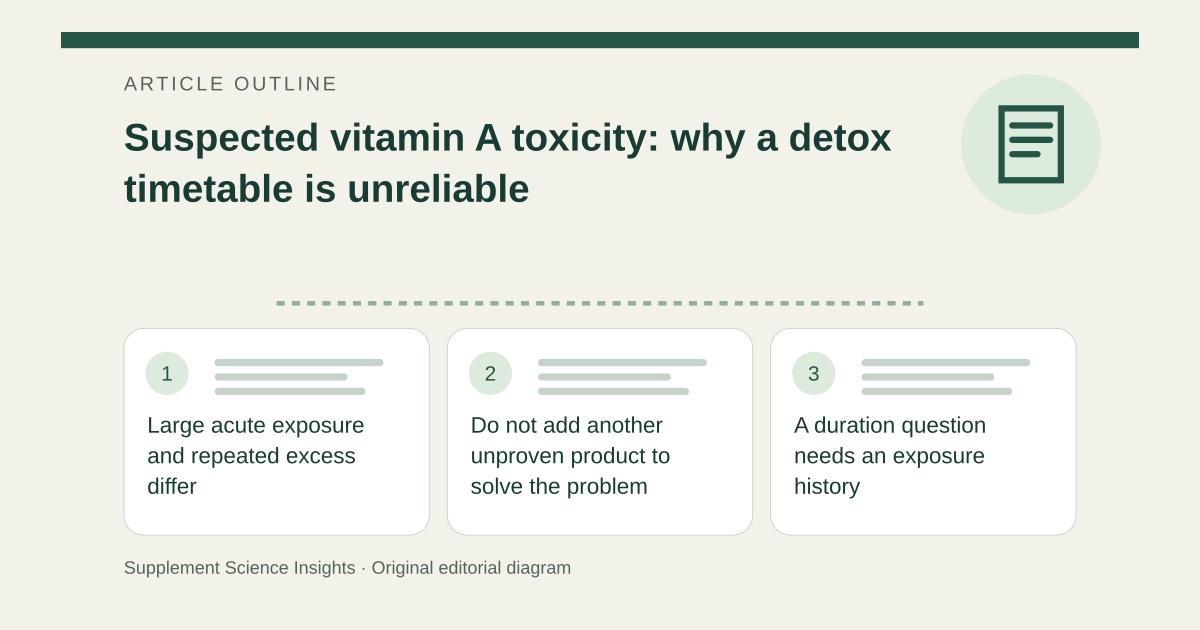
Large acute exposure and repeated excess differ
ODS distinguishes toxicity after one or a few very high doses from chronic excess over time. Acute toxicity can involve severe headache, blurred vision, nausea, dizziness and coordination problems. Chronic excess can involve skin changes, muscle or joint pain, fatigue and abnormal liver tests. [1]
These symptoms are not specific enough to diagnose toxicity without context. The actual ingredient form, dose, duration and other sources must be established. Supplements and concentrated foods can both contribute preformed vitamin A. [1]
Do not add another unproven product to solve the problem
A detox supplement does not supply an established clearance schedule. Because the body stores vitamin A, the time course cannot be read from one label or inferred from how quickly a water-soluble substance might be excreted. [1]
Seek prompt clinical or poison-center advice after a suspected large ingestion or concerning symptoms. Bring the product information and exposure history. Prescribed retinoid medicines also require the prescriber’s input rather than an improvised change based on nutrient advice. [1]
A duration question needs an exposure history
Imagine two people report excess vitamin A, but one took a large amount once and the other used several products for months. Their histories are different; a single online clearance promise cannot address both.
| Detail | Meaning |
|---|---|
| Acute exposure | One or a few very large doses |
| Chronic exposure | Repeated excess |
| Detox claim | No reliable personal timetable |
Sources for this article
- NIH ODS: Vitamin A and Carotenoids
Source consulted: 2026-09-17. This is a reference resource, not a claim that we conducted the studies or tested a product.