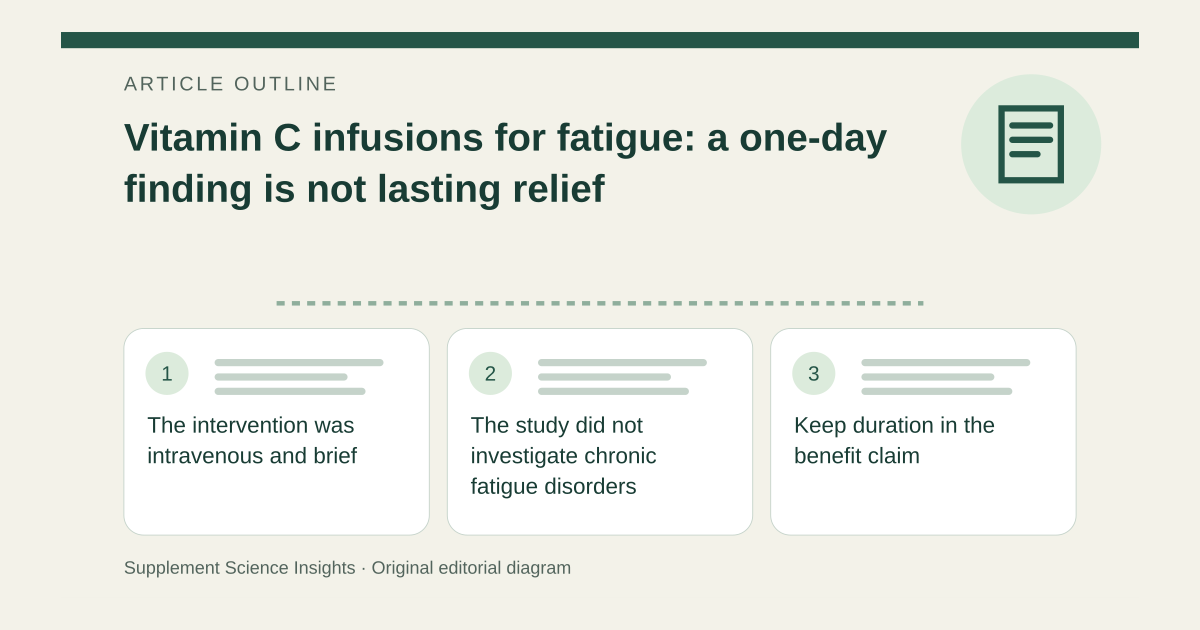
The intervention was intravenous and brief
The double-blind trial included 141 healthy volunteers aged 20–49. Participants received a vitamin C infusion in saline or saline alone, with fatigue assessed two hours and one day later. [1]
The vitamin C group reported lower fatigue scores at those time points. The report also described a signal among participants with lower starting vitamin C levels, but a subgroup result needs cautious interpretation. [1]
The study did not investigate chronic fatigue disorders
The result cannot establish durable benefit, an optimal repeat-infusion schedule or effectiveness of oral tablets. It also does not identify the cause of an individual’s ongoing fatigue. [1]
Adverse events did not differ significantly during the short observation period, which cannot establish safety of repeated high-dose infusions. Funding and conflicts were not fully assessed from the abstract. Persistent fatigue warrants assessment of its cause rather than assuming that a temporary score change makes an infusion necessary. [1]
Keep duration in the benefit claim
Imagine a symptom score improves for one day after an intervention. That does not demonstrate a benefit lasting weeks or establish that repeated treatment is effective.
| Detail | Interpretation |
|---|---|
| Healthy office workers | Selected population |
| One day | Follow-up limit |
| Chronic fatigue treatment | Not established |
Sources for this article
- Intravenous vitamin C administration reduces fatigue in office workers: a double-blind randomized controlled trial - PubMed
Source consulted: 2026-09-19. This is a reference resource, not a claim that we conducted the studies or tested a product.