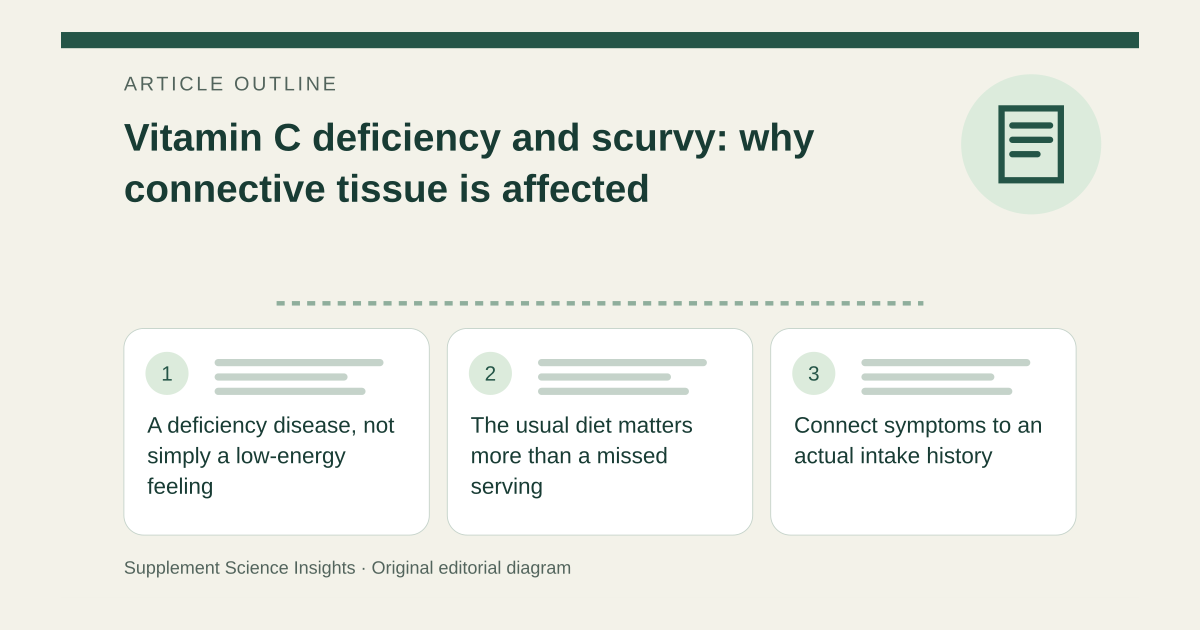
A deficiency disease, not simply a low-energy feeling
Vitamin C is required for collagen synthesis. When severe deficiency disrupts that process, connective tissues and small blood vessels become fragile. The resulting disease, scurvy, can involve bleeding gums, easy bruising, poor wound healing and joint pain. [1]
Early symptoms can include fatigue and inflamed gums, but those symptoms have many other possible causes. They should not be used as a home diagnostic test for scurvy. Untreated scurvy can be serious and requires assessment and treatment. [1]
The usual diet matters more than a missed serving
ODS describes scurvy after prolonged very low intake, with onset influenced by body stores. Missing fruit for a single day is a different situation from weeks of a severely restricted diet. The precise timeline is not the same for everyone. [1]
Risk can arise with limited food variety, malabsorption or certain chronic diseases. Infants fed evaporated or boiled cow’s milk can also receive inadequate vitamin C; ODS does not recommend this feeding practice. Infant feeding concerns require pediatric advice. [1]
Connect symptoms to an actual intake history
Imagine someone has eaten a very narrow menu for weeks and develops unexplained bruising and gum problems. A useful clinical history includes the foods eaten, duration of restriction and symptoms, rather than just a request for a strong vitamin tablet.
That combination raises a question for assessment. It does not exclude dental disease, medication effects or other causes of bleeding.
| Detail | Meaning |
|---|---|
| What foods are missing? | Identifies possible intake gaps |
| How long has the pattern lasted? | Distinguishes a sustained restriction |
| Bleeding or poor healing | Needs assessment rather than a symptom-only diagnosis |
Adequate intake and treatment are different decisions
Regular vitamin C sources such as fruit and vegetables help prevent deficiency. Recommended daily intakes are higher than the minimal amount that prevents overt scurvy, so avoiding the disease is not the only goal of nutritional adequacy. [1]
A suspected deficiency disease should not be managed solely by copying an online dose. A clinician can assess the cause, choose replacement and determine whether other nutritional problems need attention. [1]
Sources for this article
- NIH ODS — Vitamin C: Health Professional Fact Sheet
Source consulted: 2026-09-17. This is a reference resource, not a claim that we conducted the studies or tested a product.