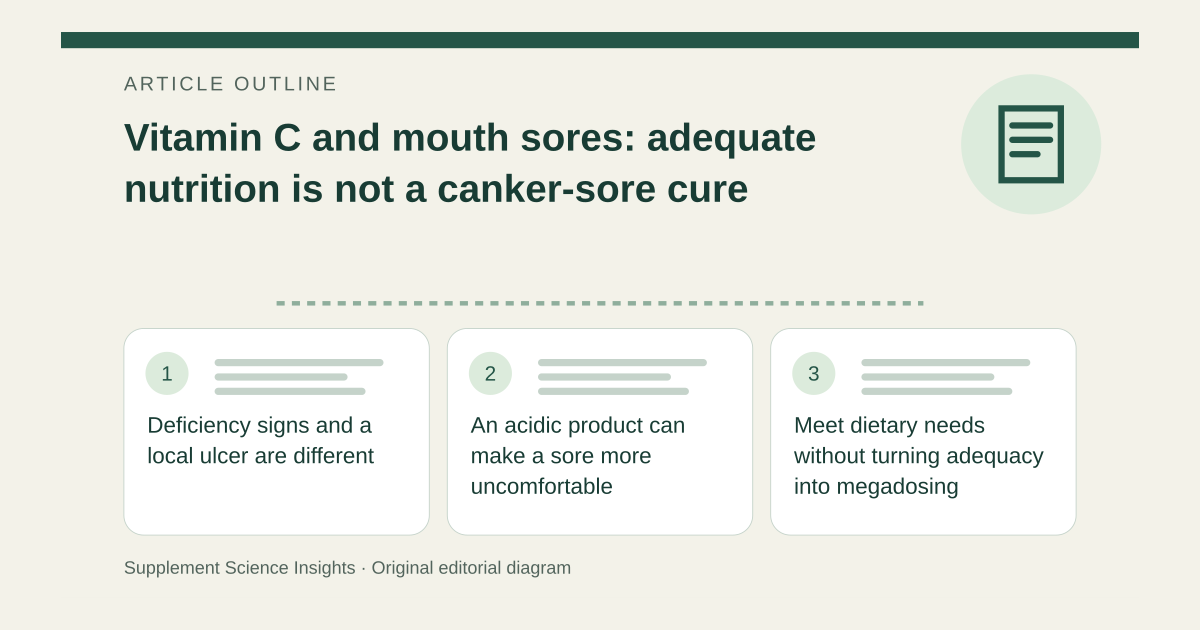
Deficiency signs and a local ulcer are different
Severe vitamin C deficiency can cause gum changes and poor wound healing. Common mouth ulcers also have other causes, including local injury and irritation. A single sore cannot determine nutritional status or show that vitamin C supplementation is the right treatment. [1][2]
An acidic product can make a sore more uncomfortable
NHS advises avoiding acidic foods and drinks when they irritate a mouth ulcer. That includes considering the actual product rather than assuming a vitamin-containing drink must soothe the area. Do not apply crushed vitamin C tablets directly to a sore as an improvised treatment. [2]
Meet dietary needs without turning adequacy into megadosing
Vitamin C supports collagen synthesis and normal healing, but that role does not establish that high doses prevent ordinary recurrent canker sores in an adequately nourished person. A nutritional gap should be assessed in context; large doses can also cause gastrointestinal effects. [1]
Use persistence as a reason for examination
NHS advises dental or medical review for an ulcer lasting more than three weeks, one that differs from usual, or one that bleeds or becomes more painful and red. Imagine a sore persists despite supplements: investigate the cause rather than simply increasing the vitamin dose. [2]
| Finding | Interpretation |
|---|---|
| Stings with acidic drink | Possible local irritation |
| One ulcer | Not a vitamin C deficiency diagnosis |
| Persists beyond three weeks | Needs dental or medical review |
Sources for this article
- Vitamin C - Health Professional Fact Sheet
Source consulted: 2026-09-21. This is a reference resource, not a claim that we conducted the studies or tested a product. - Mouth ulcers - NHS
Source consulted: 2026-09-21. This is a reference resource, not a claim that we conducted the studies or tested a product.