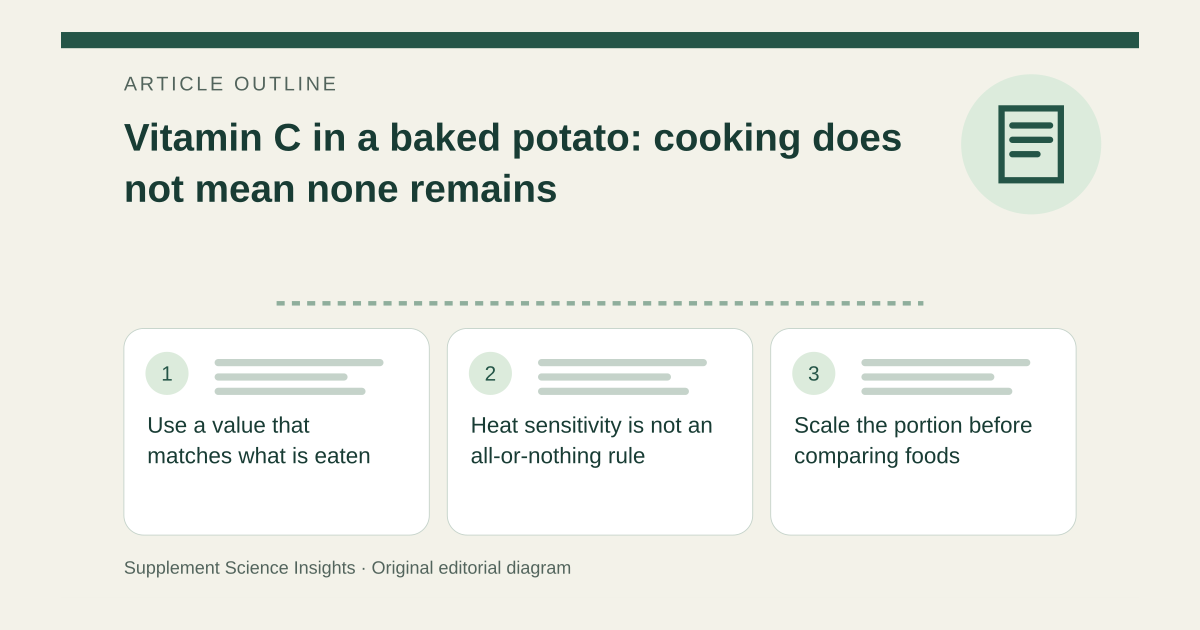
Use a value that matches what is eaten
ODS lists about 17 mg vitamin C for a medium baked potato. That is a prepared-food entry, not an uncooked-potato amount assumed to survive unchanged. Potatoes can contribute to intake through how often and how much they are eaten, despite not being the most concentrated source. [1]
Serving size still matters. A small portion of potato should not be assigned the amount for an entire medium baked potato. [1]
Heat sensitivity is not an all-or-nothing rule
ODS notes that vitamin C is water soluble and susceptible to heat and prolonged storage. Those facts explain why preparation can matter, but they do not establish that cooking destroys every milligram. [1]
Nor can unmatched raw and cooked food-table entries quantify the loss in a specific recipe. Water content, weight, food variety and portion definition can differ. A retained amount and a percentage loss are separate calculations. [1]
Scale the portion before comparing foods
Using the representative value, half a medium baked potato contributes about 8.5 mg. Comparing that portion with a whole orange should preserve the different portion sizes rather than presenting the result as a gram-for-gram comparison.
| Detail | Interpretation |
|---|---|
| Medium baked potato | About 17 mg |
| Half that portion | About 8.5 mg |
| Cooking effect | Not complete elimination |
Sources for this article
- Vitamin C - Health Professional Fact Sheet
Source consulted: 2026-09-17. This is a reference resource, not a claim that we conducted the studies or tested a product.