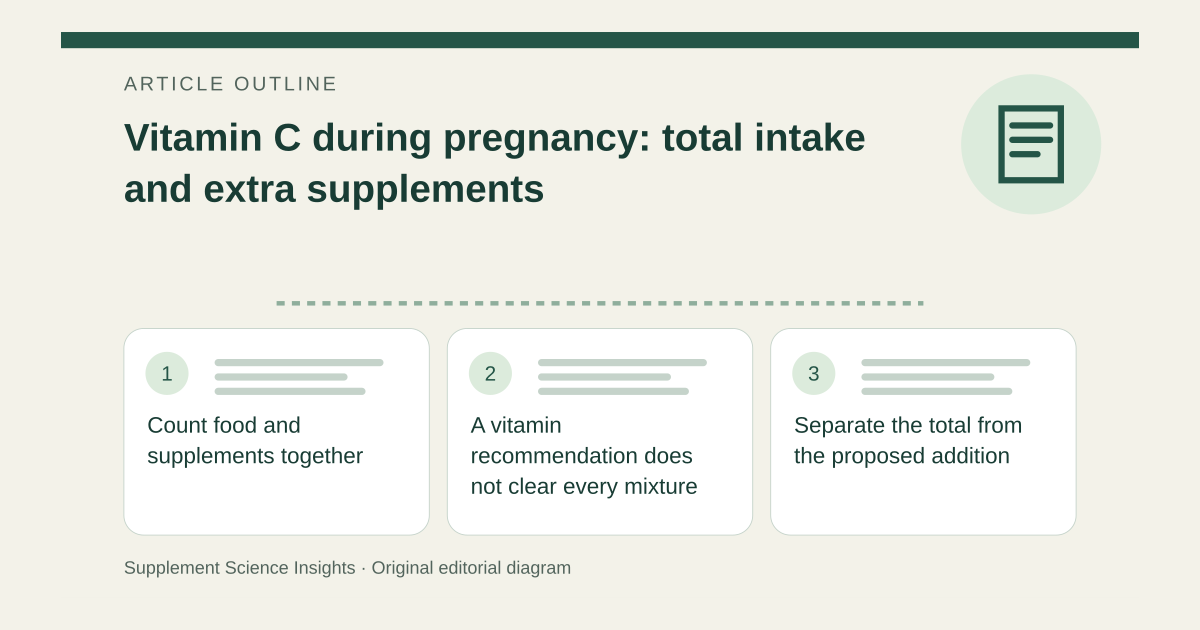
Count food and supplements together
Fruits and vegetables supply vitamin C, including peppers, citrus fruit, kiwifruit and broccoli. A prenatal product may contribute as well. The recommended amount describes the overall daily intake for a healthy population, rather than an extra capsule requirement for everyone. [1]
Pregnancy changes the reference intake, but a higher intake is not automatically a better outcome. A dietary shortfall and a proposed high-dose preventive treatment are different questions. [1]
A vitamin recommendation does not clear every mixture
WHO recommends against vitamin E and C supplementation for improving maternal and perinatal outcomes. That recommendation principally addresses combined antioxidant interventions, often studied for pre-eclampsia prevention; it is not advice to avoid vitamin-C-containing foods. [2][3]
A product combining vitamin C with rose hips introduces an additional ingredient and preparation. The cited vitamin intake guidance does not establish safety or benefit for every rose-hip extract during pregnancy. Review the complete formula rather than assigning the vitamin’s nutritional role to the mixture. [2][3]
Separate the total from the proposed addition
Imagine a diet and prenatal product already supply the recommended vitamin C intake. An extra high-dose combination needs its own justification. Its amount cannot be defended simply by pointing out that vitamin C is essential.
| Situation | Interpretation |
|---|---|
| 85 mg/day | Adult pregnancy total-intake RDA |
| 80 mg/day | Teen pregnancy total-intake RDA |
| Rose-hip mixture | Separate formulation assessment |
Sources for this article
- NIH ODS: Vitamin C
Source consulted: 2026-09-17. This is a reference resource, not a claim that we conducted the studies or tested a product. - WHO: Recommendations on Antenatal Care — Recommendation A.8
Source consulted: 2026-09-17. This is a reference resource, not a claim that we conducted the studies or tested a product. - NIH ODS: Dietary Supplements — What You Need to Know
Source consulted: 2026-09-17. This is a reference resource, not a claim that we conducted the studies or tested a product.