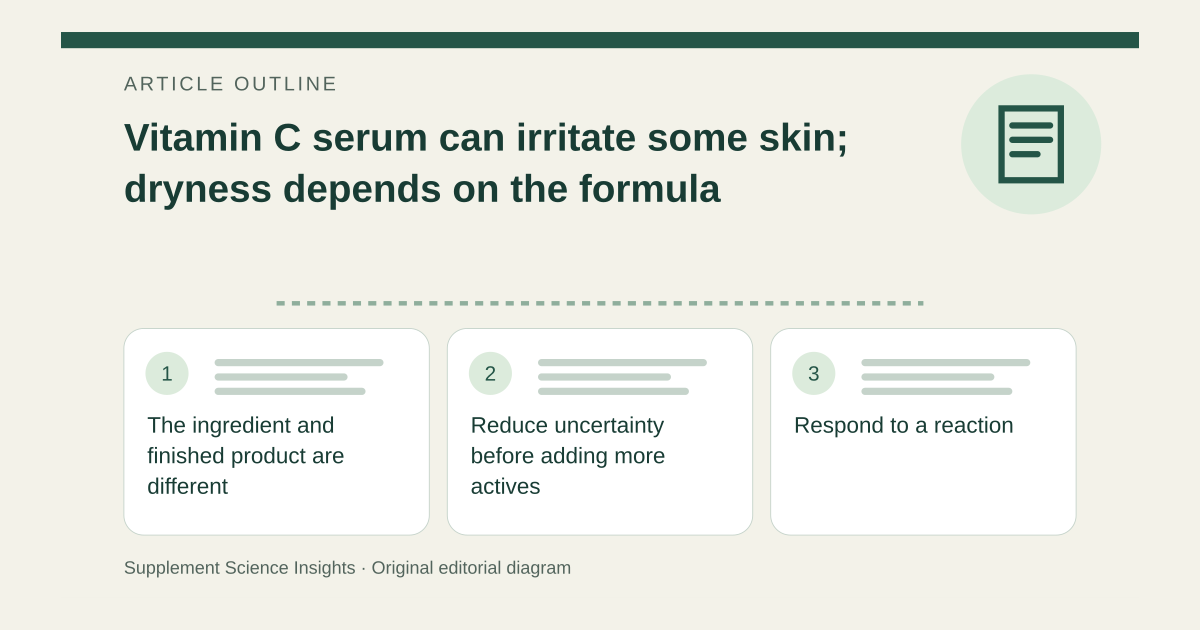
The ingredient and finished product are different
The skin-health review notes that topical formulations differ in pH and additional ingredients, making broad conclusions about dryness difficult. A reaction to one serum therefore does not prove that all vitamin C forms will behave identically. It also does not identify the culprit ingredient without further assessment. [1]
Reduce uncertainty before adding more actives
Review whether the routine also includes exfoliants or other irritating treatments. AAD cautions that excessive product layering can irritate skin. Keep the routine simple and use an appropriate moisturizer rather than assuming dryness means the serum is removing damaged skin in a necessary way. [2]
Respond to a reaction
Imagine a newly introduced serum causes persistent redness, itching or swelling. Stop the product and seek advice when symptoms are significant or do not settle. AAD’s small-area testing approach can help assess new products, but a home test is not a diagnosis of allergy or a guarantee against later irritation. [3]
| Example | Interpretation |
|---|---|
| One serum causes dryness | Does not establish a class-wide effect |
| Several active products | Review the combined routine |
| Persistent reaction | Stop and obtain appropriate advice |
Sources for this article
- The Roles of Vitamin C in Skin Health - PMC
Source consulted: 2026-09-20. This is a reference resource, not a claim that we conducted the studies or tested a product. - Should I apply my skin care products in a certain order?
Source consulted: 2026-09-20. This is a reference resource, not a claim that we conducted the studies or tested a product. - How to test skin care products
Source consulted: 2026-09-20. This is a reference resource, not a claim that we conducted the studies or tested a product.