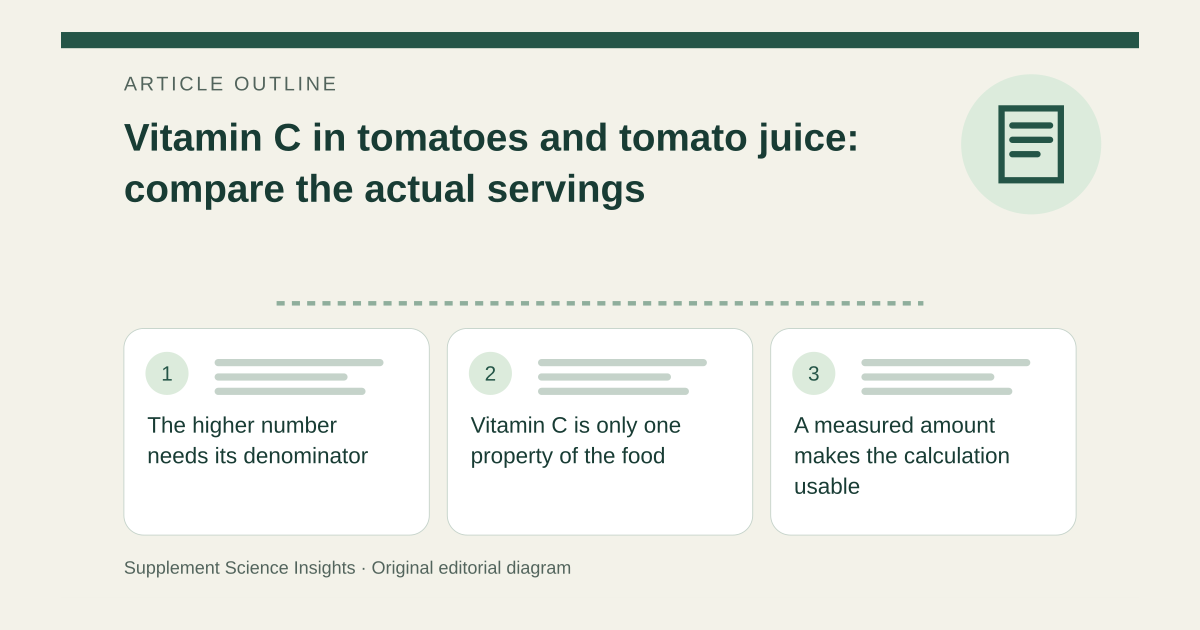
The higher number needs its denominator
A medium tomato and a measured volume of juice are not automatically equal amounts of the starting food. The table can estimate their contributions to a diet but does not show that processing a tomato doubles its vitamin C. [1]
Commercial juice can also vary. Use the particular product’s nutrient information when available and record the volume actually consumed. [1]
Vitamin C is only one property of the food
A food comparison should not infer a universal healthier choice from one nutrient. Different serving formats can change how much is consumed and what else accompanies it. The vitamin C amount alone does not settle the whole dietary decision. [1]
ODS also notes that storage and cooking can reduce vitamin C. Those general effects do not replace a product-specific value or justify carrying a fresh-tomato estimate into every sauce or juice. [1]
A measured amount makes the calculation usable
If a juice provides 33 mg per three-quarter cup, half that listed serving contributes about 16.5 mg. That is a portion calculation, not a laboratory comparison with an individual tomato.
| Detail | Interpretation |
|---|---|
| Medium raw tomato | About 17 mg |
| Three-quarter cup juice | About 33 mg |
| Different portions | Not a processing experiment |
Sources for this article
- Vitamin C - Health Professional Fact Sheet
Source consulted: 2026-09-17. This is a reference resource, not a claim that we conducted the studies or tested a product.