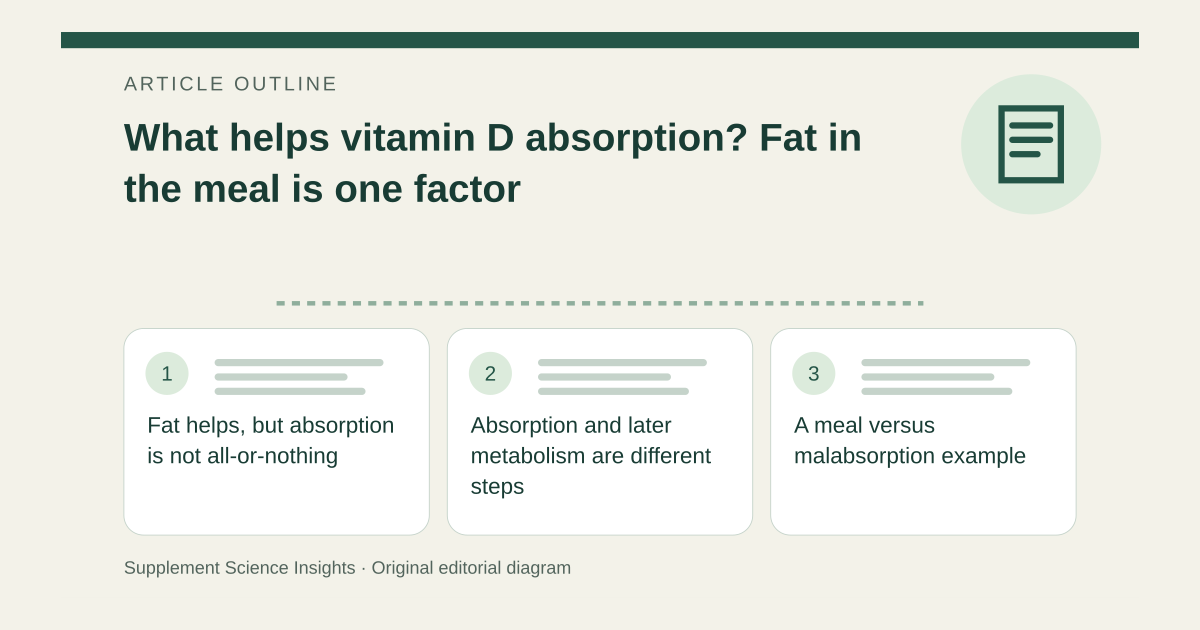
Fat helps, but absorption is not all-or-nothing
NIH ODS reports that vitamin D is absorbed in the small intestine and that concurrent dietary fat enhances absorption. Some vitamin D is absorbed without dietary fat. This does not establish a need for a very fatty meal or a specific number of oil capsules. [1]
Absorption and later metabolism are different steps
Intestinal uptake should not be confused with conversion of vitamin D to its circulating and active forms. Nor does a claim about K 2 and bone biology show that K 2 is necessary for vitamin D to cross the gut. The cited absorption guidance does not establish a universal D-plus-K 2 requirement. [1]
A meal versus malabsorption example
Imagine a person takes vitamin D with a normal meal containing fat. That can fit the absorption evidence, but it does not resolve a condition causing fat malabsorption. People with relevant intestinal disease or surgery may need clinician-directed assessment and a different plan; adding more fat or more supplements without that assessment is not a dependable solution. [1]
| Hypothetical factor | Relevant distinction |
|---|---|
| Meal containing some fat | Can enhance intestinal absorption |
| K 2 added | Does not by itself prove improved D uptake |
| Fat malabsorption | Clinical cause may need assessment |
Sources for this article
- Vitamin D - Health Professional Fact Sheet
Source consulted: 2026-09-20. This is a reference resource, not a claim that we conducted the studies or tested a product.