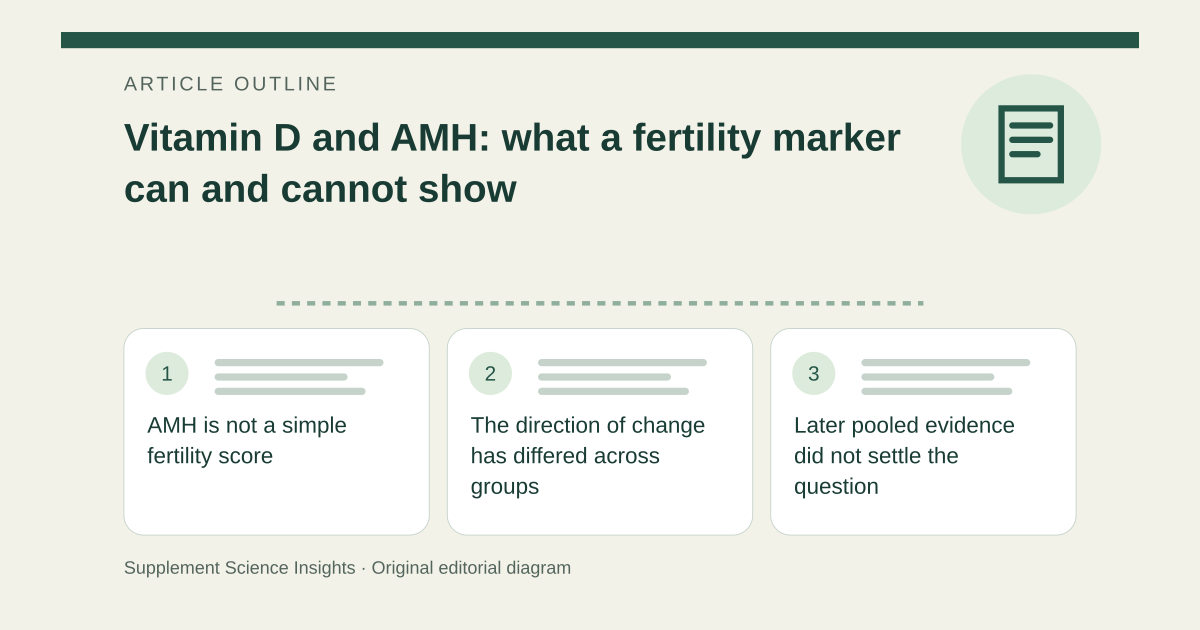
AMH is not a simple fertility score
ASRM distinguishes ovarian reserve, meaning egg quantity, from egg quality and reproductive potential. AMH is useful when estimating response to ovarian stimulation, but it is a poor stand-alone predictor of natural conception. A low result should be interpreted with age and the broader fertility assessment rather than treated as proof that pregnancy is impossible. [1]
The direction of change has differed across groups
A 2020 systematic review found inconsistent observational associations. Its intervention analysis reported lower AMH after vitamin D in women with polycystic ovary syndrome and higher AMH in ovulatory women without that condition. Those opposite directions make the claim that everyone should raise AMH with vitamin D particularly misleading. [2]
Later pooled evidence did not settle the question
A 2026 meta-analysis reported no significant overall AMH effect, although it described favorable findings for some other fertility measures. Differences in populations, interventions and outcomes limit a simple comparison between reviews. Neither finding provides an individual vitamin D dose that reliably restores ovarian reserve. [3][2]
Treat the actual problem
A clinician may recommend vitamin D for an established nutritional need while evaluating fertility separately. More vitamin D is not automatically better: excessive supplementation can cause high calcium and kidney complications. A supplement-induced laboratory change would still need to be connected to a meaningful reproductive outcome. [4][1]
Read an AMH result in context
Imagine AMH changes after a person starts vitamin D while undergoing fertility assessment. That sequence does not demonstrate that new eggs were created or egg quality improved. Discuss the test, age, ovulatory history and treatment goals with the fertility clinician rather than chasing a target number independently. [1][2]
| Finding | Limit |
|---|---|
| AMH changed | Not a direct measure of egg quality |
| Different ovulatory groups responded differently | No universal direction of benefit |
| Pooled AMH effect was not significant | No reliable boosting claim |
| Vitamin D deficiency confirmed | Treat nutritional need on its own merits |
Sources for this article
- Testing and interpreting measures of ovarian reserve: a committee opinion (2020) - ASRM
Source consulted: 2026-09-21. This is a reference resource, not a claim that we conducted the studies or tested a product. - The Association between Vitamin D and Anti-Müllerian Hormone: A Systematic Review and Meta-Analysis.
Source consulted: 2026-09-21. This is a reference resource, not a claim that we conducted the studies or tested a product. - A meta-analysis of the literature evaluating the impact of vitamin D on female fertility and ovarian reserve function.
Source consulted: 2026-09-21. This is a reference resource, not a claim that we conducted the studies or tested a product. - Vitamin D - Health Professional Fact Sheet
Source consulted: 2026-09-21. This is a reference resource, not a claim that we conducted the studies or tested a product.