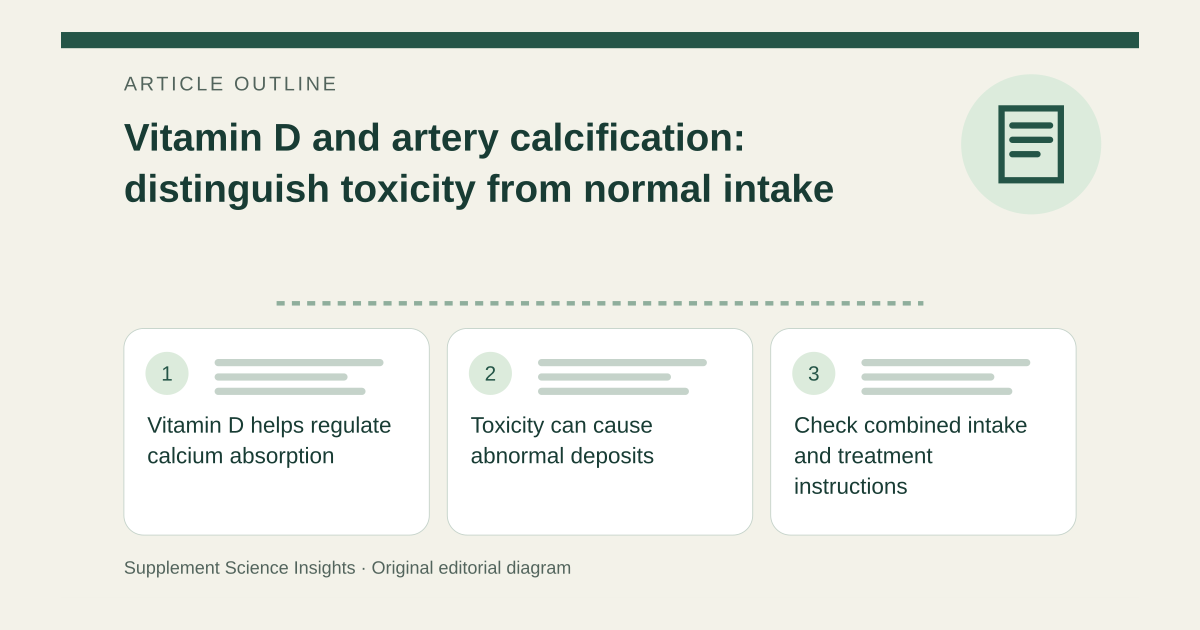
Vitamin D helps regulate calcium absorption
Adequate vitamin D supports normal calcium handling and bone health. Calcium’s normal role should not be confused with a diagnosis of arterial calcification. A simplified claim that all supplemental vitamin D sends calcium into arteries leaves out dose and clinical context. [1]
Toxicity can cause abnormal deposits
NIH describes marked hypercalcemia with excessive vitamin D and, in extreme cases, soft-tissue calcification including coronary vessels and heart valves. Toxicity is usually related to excessive supplemental intake. This is a serious adverse scenario, not evidence that every usual dose has that effect. [1]
Check combined intake and treatment instructions
Count separate vitamin D, multivitamins and calcium-vitamin D products together. Avoid converting a prescribed intermittent high dose into daily use. If there has been a possible error, seek advice with the package and actual amounts rather than trying to balance it with another supplement. [1][2]
Symptoms and test findings need clinical interpretation
Thirst, frequent urination, nausea, weakness or confusion can occur with hypercalcemia, but symptoms alone cannot measure calcium or determine artery calcification. NHS advises review for concerning symptoms during colecalciferol use. Known kidney or calcium-regulation problems require an individualized plan. [1][3]
Do not use K2 as an assumed antidote
Imagine someone takes a large vitamin D dose and adds K2 because a label promises to direct calcium. The inspected vitamin D toxicity guidance does not establish that this prevents harm or permits excessive dosing. Review the vitamin D exposure and clinical findings instead of relying on the combination claim. [1][2]
| Question | What matters |
|---|---|
| Usual intake or possible overdose? | Exposure changes the risk |
| Several supplements? | Calculate total vitamin D |
| Symptoms of high calcium? | Seek clinical assessment |
| Added K2? | Not permission to exceed a safe regimen |
Sources for this article
- Vitamin D - Health Professional Fact Sheet
Source consulted: 2026-09-21. This is a reference resource, not a claim that we conducted the studies or tested a product. - Dietary Supplements: What You Need to Know
Source consulted: 2026-09-21. This is a reference resource, not a claim that we conducted the studies or tested a product. - Side effects of colecalciferol - NHS
Source consulted: 2026-09-21. This is a reference resource, not a claim that we conducted the studies or tested a product.