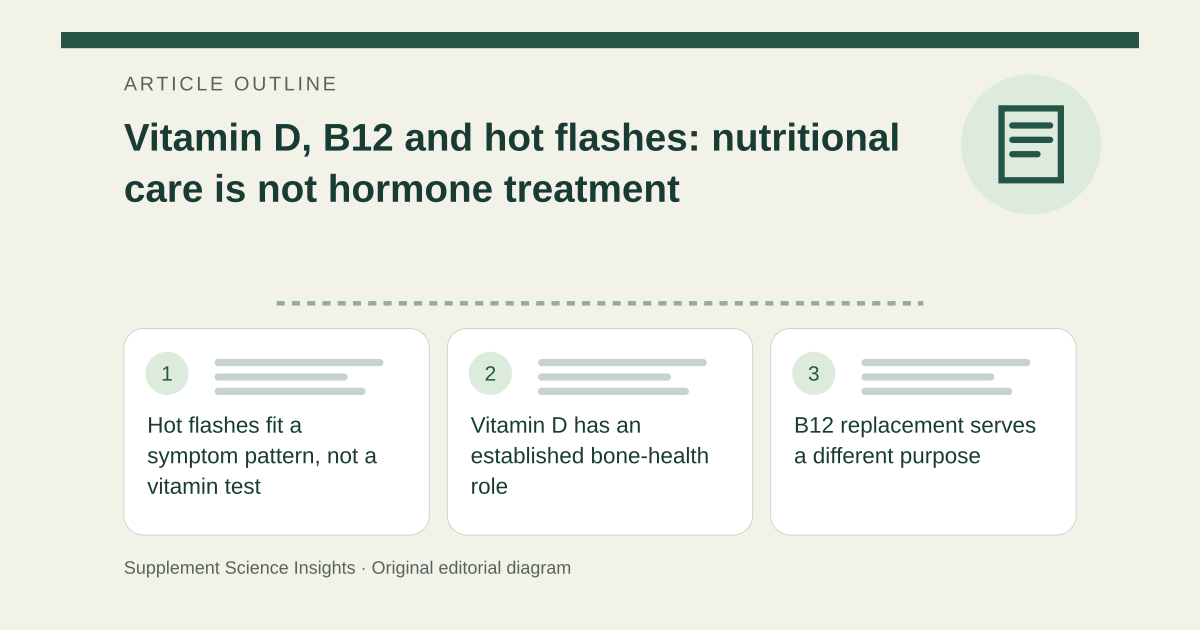
Hot flashes fit a symptom pattern, not a vitamin test
Hot flashes and night sweats commonly occur during the menopausal transition. A low vitamin result can coexist without proving it caused the episodes. Review the pattern and other symptoms, especially when the cause is uncertain. [1]
Vitamin D has an established bone-health role
NIH describes vitamin D’s role in calcium absorption and bone health. Meeting those needs is distinct from demonstrating relief of hot flashes, vaginal symptoms or mood changes. Do not judge a deficiency treatment solely by whether menopausal symptoms disappear. [2]
B12 replacement serves a different purpose
B12 deficiency can cause anemia and neurological symptoms and needs appropriate treatment. That does not establish B12 as a hot-flash remedy for someone without deficiency. An energy or nerve-health label should not be treated as evidence of hormonal symptom control. [3][1]
Effective symptom care is individualized
Current NHS guidance describes HRT and nonhormonal options for menopausal symptoms, including treatment approaches for hot flashes and night sweats. Suitability depends on the person’s history and preferences. Discuss persistent symptoms rather than replacing that review with higher vitamin doses. [4]
Keep the treatment goals visible
Imagine a person needs vitamin D for inadequate intake and also wants fewer nighttime hot flashes. Address both goals explicitly. Taking the nutrient correctly can be worthwhile even if a separate menopause treatment is needed for sleep-disrupting episodes. [2][4]
| Goal | Relevant action |
|---|---|
| Adequate vitamin D | Review intake and bone-health needs |
| Treat B12 deficiency | Use appropriate replacement |
| Reduce hot flashes | Discuss symptom-specific care |
| Assess a supplement claim | Do not infer hormonal efficacy |
Sources for this article
- Menopausal Symptoms: In Depth | NCCIH
Source consulted: 2026-09-21. This is a reference resource, not a claim that we conducted the studies or tested a product. - Vitamin D - Health Professional Fact Sheet
Source consulted: 2026-09-21. This is a reference resource, not a claim that we conducted the studies or tested a product. - Vitamin B12 - Health Professional Fact Sheet
Source consulted: 2026-09-21. This is a reference resource, not a claim that we conducted the studies or tested a product. - Treatment for menopause and perimenopause - NHS
Source consulted: 2026-09-21. This is a reference resource, not a claim that we conducted the studies or tested a product.