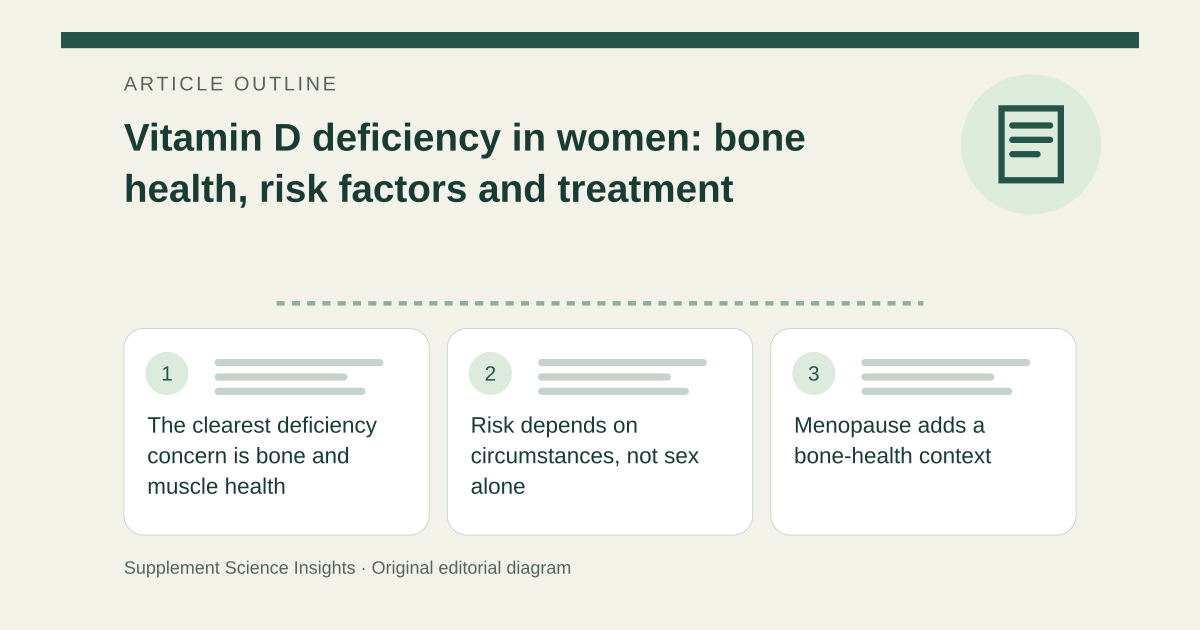
The clearest deficiency concern is bone and muscle health
NIH ODS describes adult osteomalacia when bone does not mineralize normally because of vitamin D deficiency. Muscle weakness and pain can also occur. These effects differ from a claim that every episode of fatigue, hair change or low mood is caused by low vitamin D. [1]
Risk depends on circumstances, not sex alone
Limited sunlight exposure, low intake, malabsorption and some kidney problems can affect vitamin D status. Older age and certain restrictive diets may also matter. Review the actual risk factors rather than assuming all women need the same test or high-strength product. [1]
Menopause adds a bone-health context
Bone breakdown can outpace formation as women pass through menopause. Adequate vitamin D supports calcium absorption, but osteoporosis assessment and treatment involve more than vitamin D. Evidence for supplements preventing fractures or falls is not uniform across populations, so a pill is not a substitute for an individualized bone-health plan. [1]
Pregnancy needs adequate intake, not self-prescribed megadoses
The US recommended intake listed by ODS is 600 IU, or 15 micrograms, daily for adults through age 70, including pregnancy and lactation; this is a total-intake reference for generally healthy people, not a deficiency-treatment dose. Discuss a low result and all prenatal or other supplements with the maternity team. [1][2]
Treatment should have a defined purpose
A clinician may recommend a different regimen for confirmed deficiency, absorption problems or other medical circumstances. Excess supplemental vitamin D can raise calcium and damage health. Check micrograms versus IU and daily versus weekly instructions, especially when using several products. [1]
Do not let one result explain everything
Imagine a woman has low vitamin D plus persistent fatigue and heavy menstrual bleeding. Correcting vitamin D may be appropriate, but the other symptoms still deserve assessment. Track the replacement plan and broader symptoms instead of assuming one nutrient will resolve every concern. [1][3]
| Context | Relevant distinction |
|---|---|
| Menopause | Broader fracture-risk assessment |
| Pregnancy | Adequacy versus prescribed treatment |
| Persistent symptoms | Other causes may coexist |
| Multiple products | Avoid duplicated dosing |
Sources for this article
- Vitamin D - Health Professional Fact Sheet
Source consulted: 2026-09-21. This is a reference resource, not a claim that we conducted the studies or tested a product. - Dietary Supplements: What You Need to Know
Source consulted: 2026-09-21. This is a reference resource, not a claim that we conducted the studies or tested a product. - Tiredness and fatigue - NHS
Source consulted: 2026-09-21. This is a reference resource, not a claim that we conducted the studies or tested a product.