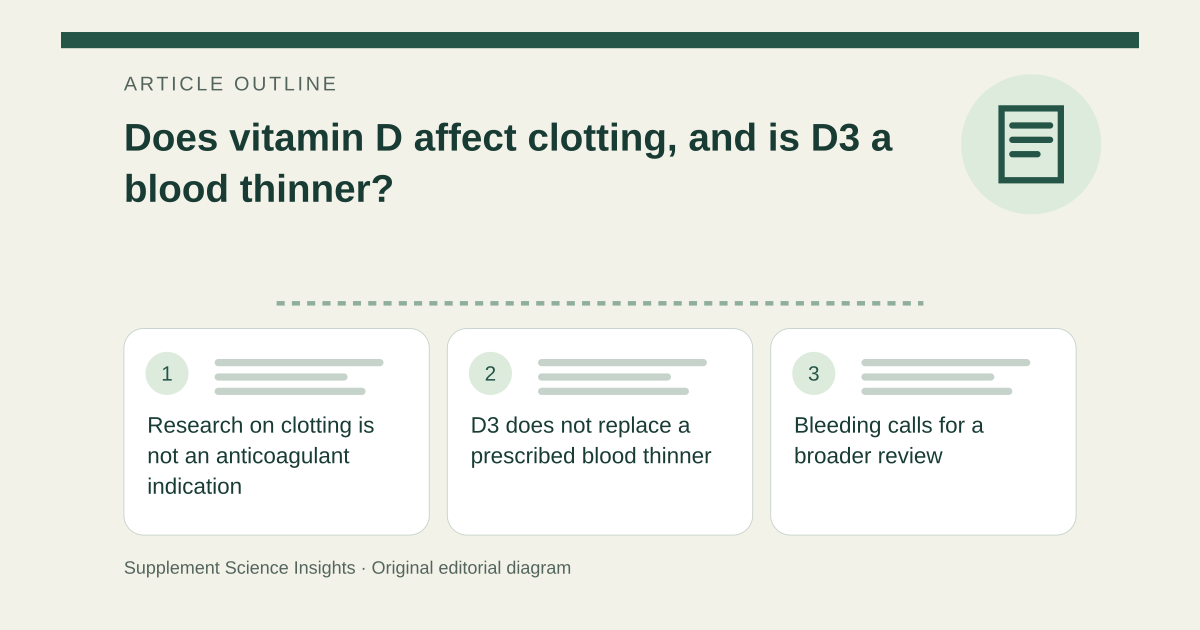
Research on clotting is not an anticoagulant indication
A systematic review examined 18 observational and intervention studies of vitamin D and hemostatic measures. Most did not show clear associations, and some results conflicted. The review found no definitive prothrombotic profile from deficiency and no clinical evidence establishing an antithrombotic effect of vitamin D. [1]
D3 does not replace a prescribed blood thinner
D3, or cholecalciferol, is a form of vitamin D used to support nutritional needs and treat deficiency. A possible influence on a biological pathway is different from a proven medicine that prevents or treats thrombosis. Do not alter a prescribed anticoagulant on the basis of a vitamin D claim. [2][1]
Bleeding calls for a broader review
The principal toxicity described by NIH for excessive vitamin D is high calcium, potentially affecting the kidneys and other organs. That does not establish vitamin D as the explanation for bruising or bleeding. Combination supplements and prescription medicines require their own assessment; the ingredient name D3 is not enough to judge an entire product. [2]
Use a practical medication question
Imagine someone taking an anticoagulant is offered a D3 combination product. The useful question is whether that exact formulation and dose fit their treatment plan, not whether D3 is another blood thinner. Show the complete ingredient list to the clinician or pharmacist and report unexplained bleeding promptly. [2][1]
| Statement | Meaning |
|---|---|
| Vitamin D status linked with clot risk | Association does not establish treatment |
| Clotting marker changes | Not necessarily fewer clinical clots |
| D3 supplement | Not an anticoagulant substitute |
| Unexplained bleeding | Needs assessment of the broader context |
Sources for this article
- Is Vitamin D Deficiency Prothrombotic? A Systematic Review.
Source consulted: 2026-09-21. This is a reference resource, not a claim that we conducted the studies or tested a product. - Vitamin D - Health Professional Fact Sheet
Source consulted: 2026-09-21. This is a reference resource, not a claim that we conducted the studies or tested a product.