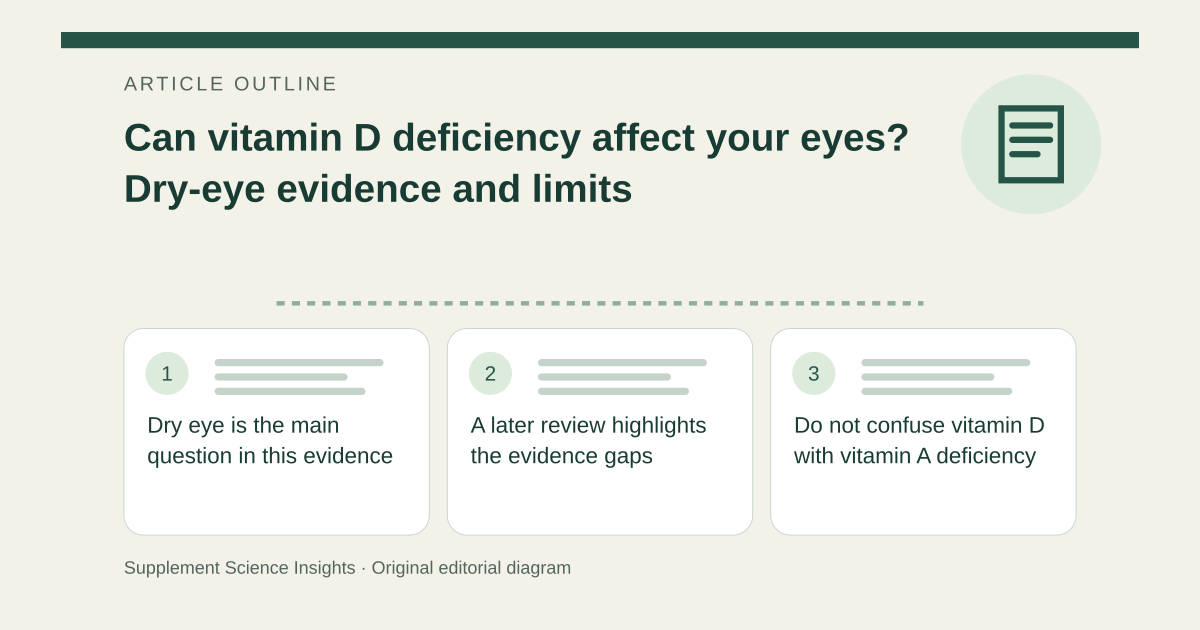
Dry eye is the main question in this evidence
A 2024 meta-analysis reported improvements in several tear and symptom measures after vitamin D supplementation. It included eight studies and described a possible adjunctive role. Its before-and-after comparisons do not carry the same causal strength as a well-controlled treatment trial. [1]
A later review highlights the evidence gaps
A 2026 systematic review of oral vitamins for dry eye found that none of its thirteen included studies was high quality. Problems included inadequate controls or power, short follow-up and varied dosing. Vitamin D was frequently studied, but the review did not establish a dependable general treatment regimen. [2]
Do not confuse vitamin D with vitamin A deficiency
NIH describes vitamin A deficiency as a cause of night blindness and severe eye-surface disease. That is a different nutrient and clinical problem from a low vitamin D result. An unexplained vision symptom cannot identify which vitamin, if any, is deficient. [3][4]
Assess the symptom and treat any deficiency appropriately
Dry-eye symptoms can need local eye care and assessment of contributing factors. A vitamin D deficiency can be addressed alongside that care without promising it will resolve every symptom. NHS advises urgent assessment for concerning combinations such as painful red eyes, marked light sensitivity or vision changes. [5][4]
Avoid a supplement-only diagnosis
Imagine a person has both a low vitamin D result and new blurred vision. Their coexistence does not prove that D replacement will fix the vision. Arrange appropriate eye assessment and use nutritional treatment for the documented need rather than waiting for an uncertain response. [5][2]
| Finding | Evidence boundary |
|---|---|
| Low D with dry eye | Association does not establish sole cause |
| Symptoms improved before versus after | Other explanations may remain |
| Variable small studies | No universal eye-treatment dose |
| New concerning vision change | Requires eye assessment |
Sources for this article
- The efficacy of vitamin D supplementation in dry eye disease: A systematic review and meta-analysis.
Source consulted: 2026-09-21. This is a reference resource, not a claim that we conducted the studies or tested a product. - The Efficacy of Oral Vitamin Supplementation in Dry Eye Disease: A Systematic Review - PMC
Source consulted: 2026-09-21. This is a reference resource, not a claim that we conducted the studies or tested a product. - Vitamin A and Carotenoids - Health Professional Fact Sheet
Source consulted: 2026-09-21. This is a reference resource, not a claim that we conducted the studies or tested a product. - Vitamin D - Health Professional Fact Sheet
Source consulted: 2026-09-21. This is a reference resource, not a claim that we conducted the studies or tested a product. - NHS: Dry eyes
Source consulted: 2026-09-21. This is a reference resource, not a claim that we conducted the studies or tested a product.