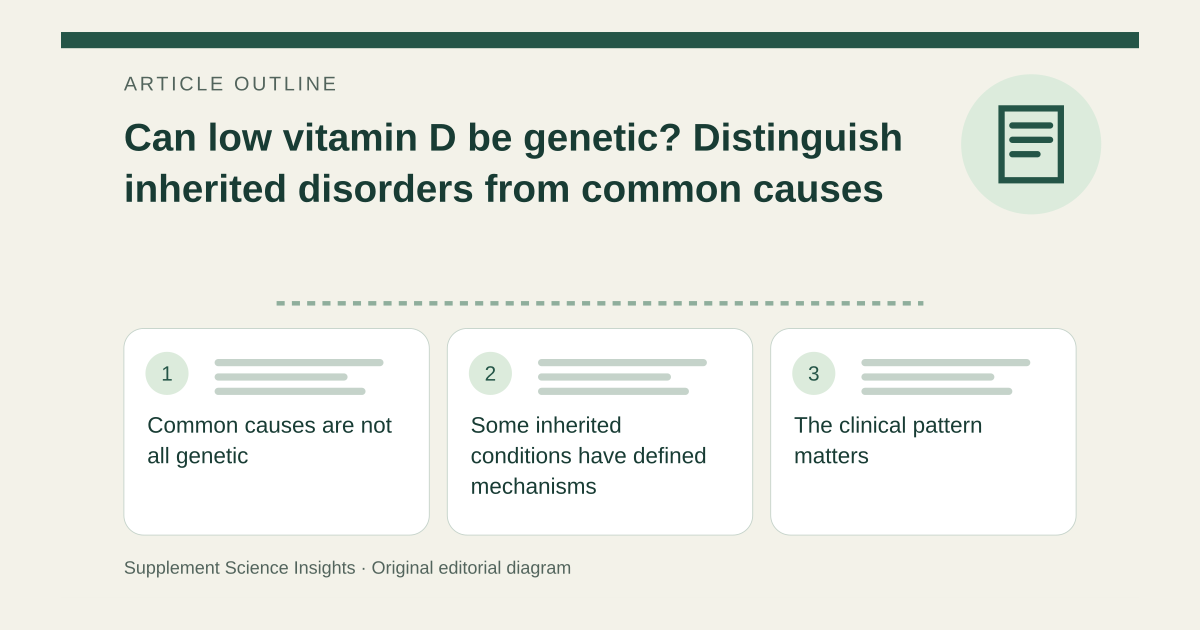
Common causes are not all genetic
NIH lists low intake, limited sun exposure, impaired absorption and problems converting vitamin D among causes of inadequate status. A family can share habits or health risks as well as genes. Several relatives with low results therefore do not prove a single inherited cause. [1]
Some inherited conditions have defined mechanisms
MedlinePlus Genetics describes vitamin D-dependent rickets involving genes such as CYP2R1 and CYP27B1, which affect activation, and VDR, which affects the vitamin D receptor. A problem responding to the active hormone is not identical to simply eating too little vitamin D. [2]
The clinical pattern matters
These rare disorders often present in infancy or childhood with problems such as weak bones, poor growth, muscle weakness or bowed legs. MedlinePlus notes that genetic forms are much less common than nutritional or sun-exposure-related rickets. An isolated adult screening result is not enough to diagnose one. [2]
Treatment is not a do-it-yourself higher dose
Some inherited forms do not respond to standard vitamin D doses and require specialist management. Persistent abnormal results or a suggestive clinical history should prompt review of the diagnosis, regimen and absorption, with genetic evaluation when appropriate. A consumer gene report cannot supply that treatment plan. [2][1]
Review the pattern before assuming inheritance
Imagine two family members have low levels after long periods indoors. Discuss ordinary risk factors and response to an appropriate plan first. If the history includes early severe bone disease or unusual treatment response, make that history visible to the clinician. [1][2]
| Observation | Next question |
|---|---|
| Several low results | Shared environment or another cause? |
| Early severe bone disease | Specialist assessment needed? |
| Poor treatment response | Regimen, absorption or metabolism? |
| Genetic variant report | Does it explain the clinical findings? |
Sources for this article
- Vitamin D - Health Professional Fact Sheet
Source consulted: 2026-09-21. This is a reference resource, not a claim that we conducted the studies or tested a product. - Vitamin D-dependent rickets: MedlinePlus Genetics
Source consulted: 2026-09-21. This is a reference resource, not a claim that we conducted the studies or tested a product.