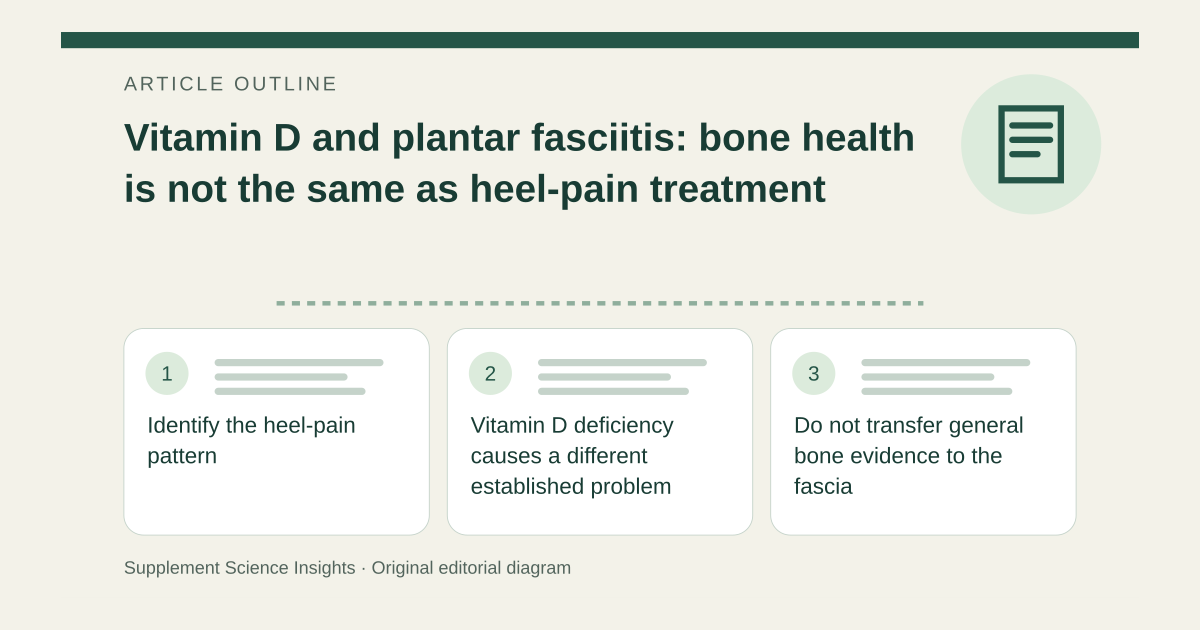
Identify the heel-pain pattern
NHS describes plantar fasciitis as pain around the heel and arch, often worse with the first steps after resting and with prolonged standing or walking. A clinician may need to distinguish it from other causes of foot pain. The location alone does not reveal a vitamin level. [1]
Vitamin D deficiency causes a different established problem
NIH describes osteomalacia and associated bone pain or muscle weakness in deficient adults. Such symptoms can overlap with other musculoskeletal complaints, but overlap is not proof that deficiency caused irritation of the plantar fascia. [2]
Do not transfer general bone evidence to the fascia
The inspected NHS care guidance emphasizes reducing aggravating load, supportive footwear, stretching and other appropriate measures. It does not establish a vitamin D protocol that resolves plantar fasciitis. Treating a confirmed deficiency remains worthwhile without promising a heel-pain cure. [1][2]
Seek review when self-care is not enough
NHS advises assessment for severe or recurrent pain, symptoms not improving with self-care, or tingling or loss of sensation. People with diabetes should seek advice for foot pain. Waiting for supplements to work can delay evaluation of another problem. [1]
Follow both problems if they coexist
Imagine heel pain follows a large increase in walking and a blood test also shows low vitamin D. Address the heel load and recovery plan as well as the deficiency. Neither finding makes the other explanation unnecessary. [1][2]
| Finding | Relevant response |
|---|---|
| First-step heel pain | Assess plantar-fascia pattern |
| Low vitamin D | Treat the nutrient problem appropriately |
| Persistent or severe pain | Clinical review |
| Improved blood result | Does not prove fascia recovery |
Sources for this article
- Plantar fasciitis - NHS
Source consulted: 2026-09-21. This is a reference resource, not a claim that we conducted the studies or tested a product. - Vitamin D - Health Professional Fact Sheet
Source consulted: 2026-09-21. This is a reference resource, not a claim that we conducted the studies or tested a product.