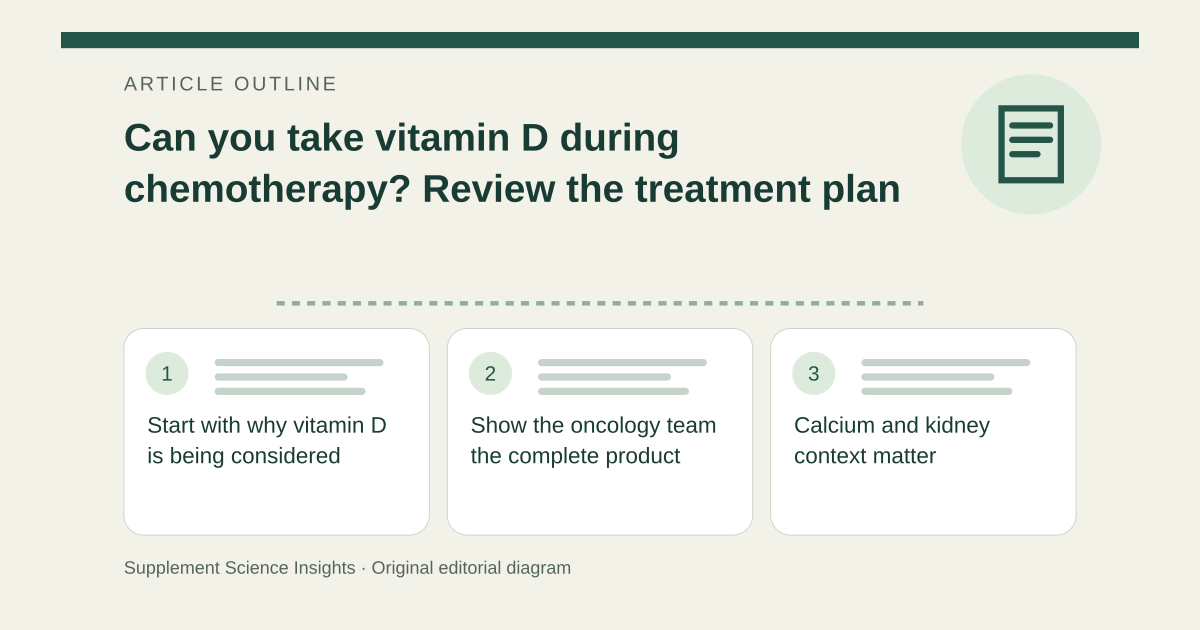
Start with why vitamin D is being considered
A documented deficiency, limited intake or a specific bone-health plan is different from taking large doses in the hope of improving chemotherapy. NIH describes vitamin D requirements and the consequences of inadequate status. Those nutritional purposes do not establish an anticancer effect. [1]
Show the oncology team the complete product
NCI advises people with cancer to discuss dietary supplements with their care team. A bottle labeled bone support or immune support can contain more than vitamin D. Provide the dose, frequency and full ingredient list so the team can judge it alongside cancer treatment and other medicines. [2]
Calcium and kidney context matter
Excess vitamin D can raise calcium and damage the kidneys. Existing calcium abnormalities, kidney function and other supplements can change the assessment. A population intake recommendation is not a chemotherapy-specific prescription, and a supervised deficiency regimen should not be copied by another patient. [1]
Do not confuse supportive care with cancer therapy
NCI states that no special food, vitamin or supplement has been shown to cure cancer. A clinician may recommend vitamin D for a particular nutritional problem while continuing the cancer regimen. That is compatible with supportive care and does not imply that the vitamin makes chemotherapy unnecessary or more effective. [2]
Make the review concrete
Imagine a patient already takes a multivitamin and is offered a second high-dose D3 product. Bring both labels and any recent laboratory results to the oncology pharmacist or clinician. The useful outcome is one agreed regimen with a reason and monitoring plan, rather than adding overlapping products independently. [1][2]
| Information | Why it helps |
|---|---|
| Exact cancer regimen | Treatment context |
| All supplement labels | Identifies overlapping ingredients |
| Reason for vitamin D | Deficiency versus an unsupported treatment claim |
| Relevant calcium and kidney results | Supports individualized safety assessment |
Sources for this article
- Vitamin D - Health Professional Fact Sheet
Source consulted: 2026-09-21. This is a reference resource, not a claim that we conducted the studies or tested a product. - Diets, Supplements, and Cancer - NCI
Source consulted: 2026-09-21. This is a reference resource, not a claim that we conducted the studies or tested a product.