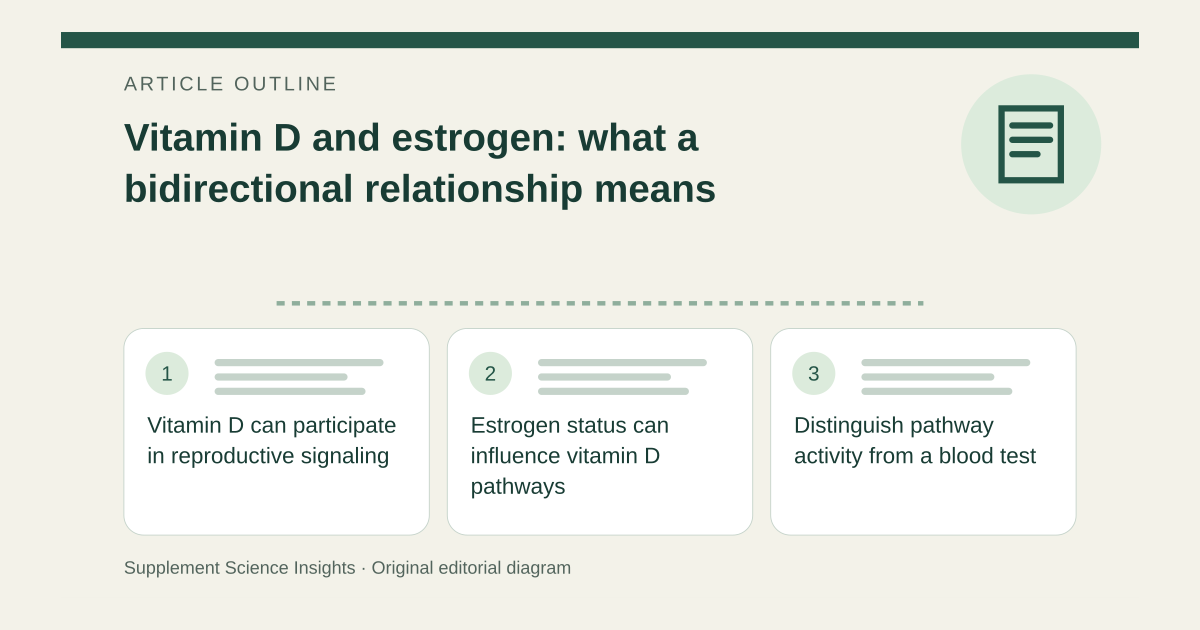
Vitamin D can participate in reproductive signaling
A 2013 review describes proposed effects of vitamin D on gonadal estrogen synthesis, including links through calcium regulation. Vitamin D acts through its own receptor and affects gene expression. These mechanisms suggest biological cross-talk, but their presence does not predict a particular blood-estrogen change after an ordinary supplement dose. [1]
Estrogen status can influence vitamin D pathways
The same review discusses estrogen-related differences in vitamin D receptor expression and activating enzymes, including experimental models of estrogen depletion. This is the other direction of the proposed relationship: sex-hormone status can affect tissue responsiveness and metabolism. Animal tissue findings are not a diagnostic rule for an individual woman. [1]
Distinguish pathway activity from a blood test
Circulating 25-hydroxyvitamin D is the main marker of vitamin D status; it is not the same substance as the active hormone or estrogen. Changes in one pathway need not create matching changes in every blood measurement. A vitamin D result alone cannot diagnose an estrogen disorder. [2][1]
Biology does not supply a treatment protocol
The review presents hypotheses about vascular and hormonal interactions. It does not establish that combining high-dose vitamin D with hormones benefits everyone or that vitamin D replaces indicated hormone therapy. Nutritional deficiency and symptoms requiring endocrine assessment should be addressed for their own reasons. [2][1]
Apply the distinction
Imagine someone with menopausal symptoms reads that estrogen and vitamin D interact. Maintaining appropriate vitamin D intake can support nutritional needs, but this mechanism does not show that increasing the dose will restore estrogen or resolve hot flashes. The symptom treatment decision requires separate evidence. [2][1]
| Direction | Evidence boundary |
|---|---|
| Vitamin D affects reproductive pathways | Not a predictable estrogen-boosting dose |
| Estrogen affects vitamin D signaling | Much mechanistic evidence is preclinical |
| Low vitamin D blood result | Not an estrogen diagnosis |
| Hormone-related symptoms | Assess separately from nutrient intake |
Sources for this article
- Protective cardiovascular and renal actions of vitamin D and estrogen - PMC
Source consulted: 2026-09-21. This is a reference resource, not a claim that we conducted the studies or tested a product. - Vitamin D - Health Professional Fact Sheet
Source consulted: 2026-09-21. This is a reference resource, not a claim that we conducted the studies or tested a product.