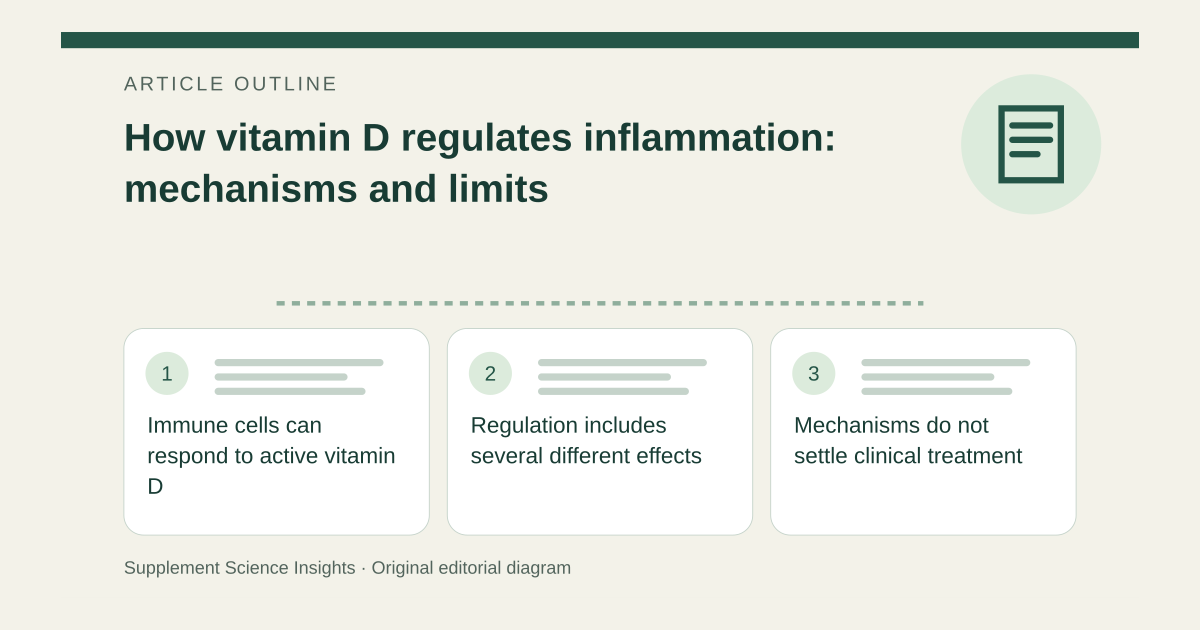
Immune cells can respond to active vitamin D
A 2021 review describes vitamin D receptors in macrophages, dendritic cells and lymphocytes. Some of these cells can also convert circulating vitamin D metabolites into an active form locally. Binding to the receptor changes gene expression, so vitamin D can influence how a cell responds to an immune challenge. [1]
Regulation includes several different effects
The review describes laboratory effects on antimicrobial peptides, antigen presentation and T-cell signaling. Active vitamin D can favor regulatory pathways and reduce some inflammatory cytokine responses. This is more specific than the claim that it simply boosts or shuts down the whole immune system. [1]
Mechanisms do not settle clinical treatment
Experiments on cells explain a possible pathway. They do not determine the supplement dose that improves symptoms, prevents complications or replaces a medicine in people. The review itself describes controversy around clinical prevention and treatment, despite associations between low vitamin D and several inflammatory diseases. [1]
Correct deficiency without treating every symptom as deficiency
NIH describes established vitamin D roles in calcium regulation and bone health as well as immune function. A clinician can consider nutritional status in the context of a diagnosed inflammatory condition. Excess supplementation can cause hypercalcemia and kidney problems; inflammation is not a reason to assume unlimited dosing is safe. [2]
A useful distinction in practice
Imagine an article shows that active vitamin D changes a cytokine in cultured cells. That supports a biological mechanism, but it does not show that a person with arthritis can stop treatment. The next evidence needed is a relevant human trial measuring symptoms or other meaningful outcomes. [1]
| Finding | What it establishes |
|---|---|
| Receptor in immune cells | A route for biological signaling |
| Cytokine changes in a laboratory | A possible mechanism |
| Low level associated with illness | Association, with possible confounding |
| Clinical trial improves symptoms | Condition-specific treatment evidence |
Sources for this article
- The Effects of Vitamin D on Immune System and Inflammatory Diseases - PMC
Source consulted: 2026-09-21. This is a reference resource, not a claim that we conducted the studies or tested a product. - Vitamin D - Health Professional Fact Sheet
Source consulted: 2026-09-21. This is a reference resource, not a claim that we conducted the studies or tested a product.