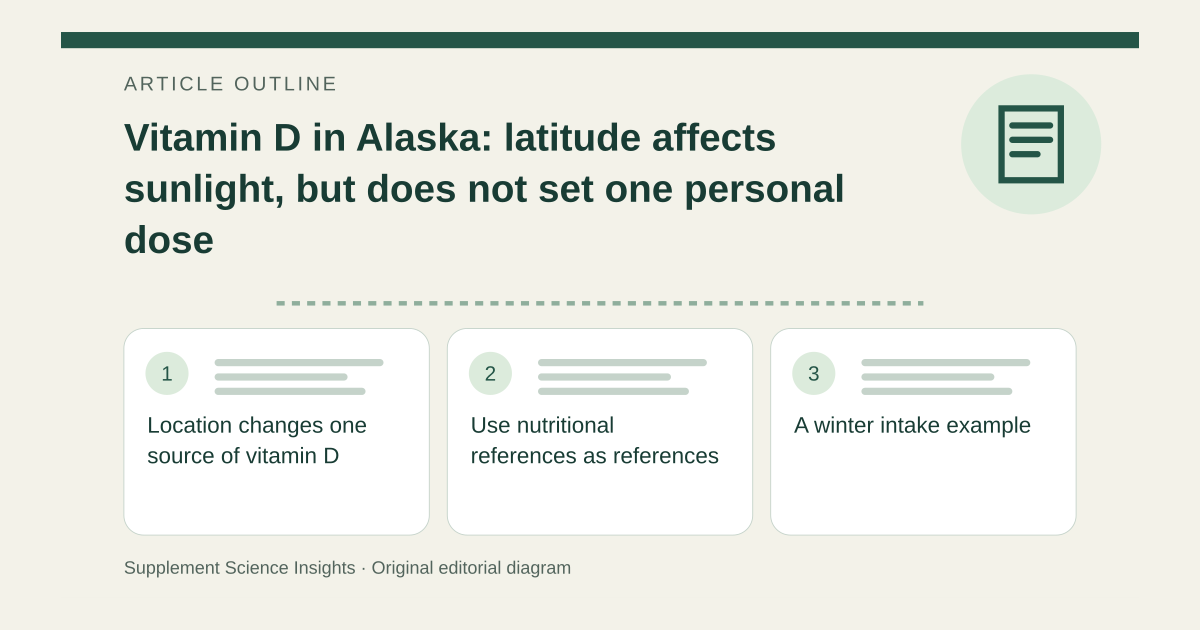
Location changes one source of vitamin D
Season and latitude affect theUV exposure available for vitamin D synthesis. Living in Alaska does not reveal how much an individual produces, eats or absorbs. Outdoor time also cannot be translated into a reliable vitamin D dose without many additional factors. [1]
Use nutritional references as references
U.S. RDAs assume minimal sun exposure:600 IU/day for ages 1–70 and 800 IU over 70, with 400 IU adequate intake for infants. These describe total intake from foods and supplements, not a location-specific requirement to add a tablet of that strength. Clinical deficiency, malabsorption or other conditions can require a separate regimen. [1]
A winter intake example
Imagine an adult in Alaska estimates 300 IU from food and 300 IU from a supplement. That gives 600 IU total, but arithmetic alone does not assess absorption or diagnose vitamin D status. Avoid using tanning beds or unprotected sun as a measured replacement strategy; discuss clinical risk and any treatment question with a clinician. [1]
| Hypothetical information | Interpretation |
|---|---|
| Alaska residence | Potentially limited sunlight source |
| 300 IU food +300 IU supplement | 600 IU estimated total |
| Known malabsorption | Needs a separate clinical assessment |
Sources for this article
- Vitamin D - Health Professional Fact Sheet
Source consulted: 2026-09-20. This is a reference resource, not a claim that we conducted the studies or tested a product.