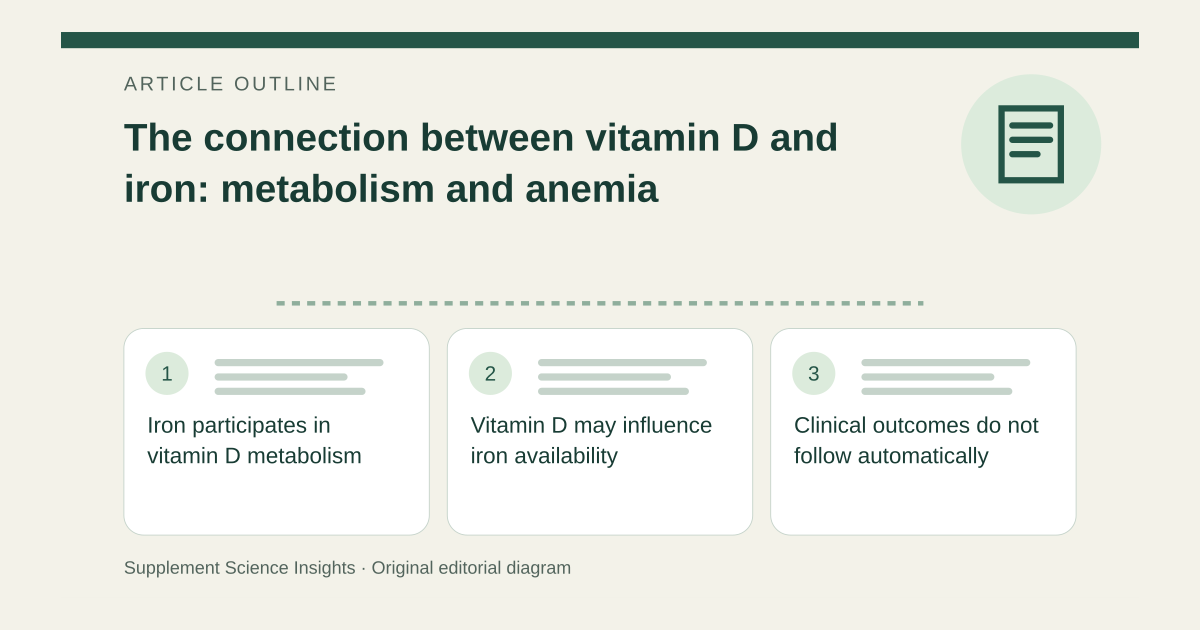
Iron participates in vitamin D metabolism
A systematic review describes iron-dependent enzyme systems involved in activating vitamin D. Observational studies linked better iron status with higher vitamin D in some settings, but the reviewed iron-supplementation trials did not consistently improve vitamin D status. A biochemical requirement does not mean extra iron benefits someone who is already iron replete. [1]
Vitamin D may influence iron availability
A separate review discusses hepcidin, a regulator of iron movement, and inflammatory signaling. Laboratory and early clinical findings suggest vitamin D may influence these pathways, particularly in anemia associated with inflammation. This is different from demonstrating that vitamin D replaces the iron lost through bleeding or inadequate intake. [2][3]
Clinical outcomes do not follow automatically
A 2020 meta-analysis of randomized trials found no significant overall improvement in hemoglobin or ferritin with vitamin D supplementation, although some other iron measures changed. The findings separate an interesting regulatory mechanism from an established treatment for anemia. Different causes of anemia may require different care. [4]
Assess the deficiencies independently
Iron deficiency and vitamin D deficiency can both be present, but symptoms or one test do not diagnose the other. Iron studies, blood counts and vitamin D assessment answer different questions when clinically indicated. Both excess iron and excess vitamin D can cause harm, so an unproven connection is not a reason to supplement both automatically. [3][5]
Use the right outcome to judge treatment
Imagine vitamin D rises after supplementation while anemia persists. That is not evidence that the vitamin D dose should keep increasing. The anemia still needs a cause-directed plan, and improvement should be judged with appropriate clinical and laboratory measures. [3][5][4]
| Measure or pathway | What it means |
|---|---|
| Vitamin D activation enzymes | A biological role for iron |
| Hepcidin signaling | Regulation of iron availability |
| Hemoglobin | A separate anemia-related outcome |
| Low vitamin D and iron together | Two findings requiring appropriate assessment |
Sources for this article
- Effects of Iron on Vitamin D Metabolism: A Systematic Review.
Source consulted: 2026-09-21. This is a reference resource, not a claim that we conducted the studies or tested a product. - Vitamin D and anemia: insights into an emerging association.
Source consulted: 2026-09-21. This is a reference resource, not a claim that we conducted the studies or tested a product. - Iron - Health Professional Fact Sheet
Source consulted: 2026-09-21. This is a reference resource, not a claim that we conducted the studies or tested a product. - The effect of vitamin D supplementation on hemoglobin concentration: a systematic review and meta-analysis.
Source consulted: 2026-09-21. This is a reference resource, not a claim that we conducted the studies or tested a product. - Vitamin D - Health Professional Fact Sheet
Source consulted: 2026-09-21. This is a reference resource, not a claim that we conducted the studies or tested a product.