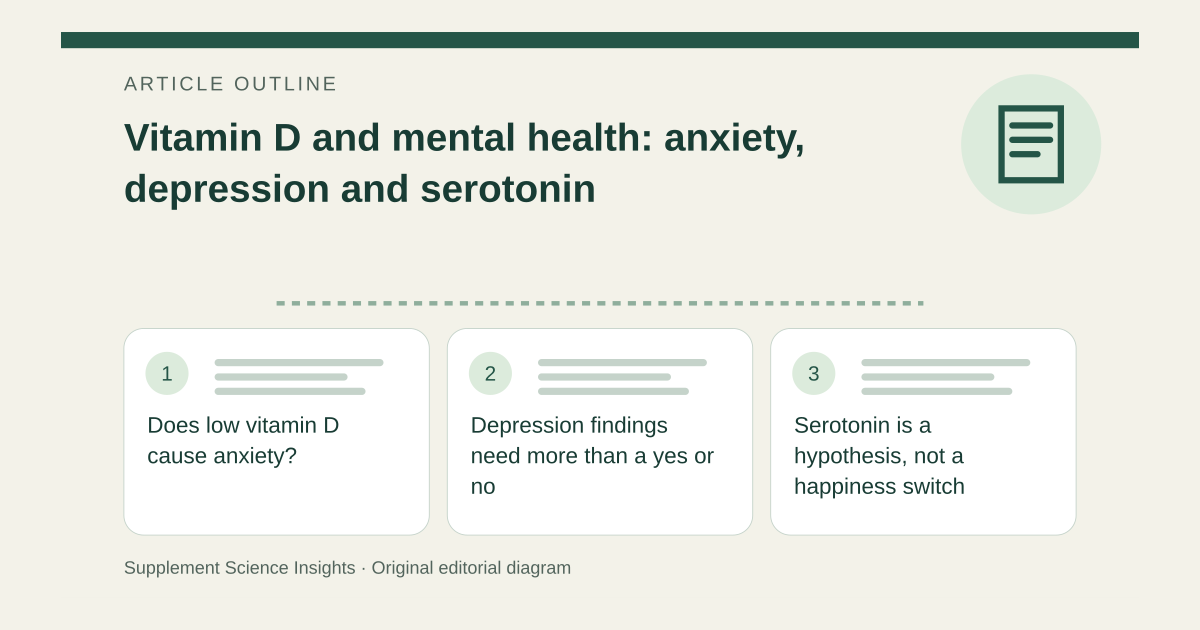
Does low vitamin D cause anxiety?
A low blood level and anxiety occurring together do not establish a cause-and-effect relationship. Illness, daily activity, diet and time outdoors can complicate the association. In a 2024 systematic review of randomized supplementation trials, anxiety symptoms did not improve significantly overall. This does not exclude benefit from correcting a deficiency for general health, but it does not establish vitamin D as an anxiety treatment. [1][2]
Depression findings need more than a yes or no
The 2024 review found a reduction in depressive symptom scores, particularly in shorter studies and people with depressive symptoms. It did not establish a significant improvement in depression remission. NIH also summarizes trials that did not prevent or treat depression in broader populations. Different populations, follow-up periods and outcomes help explain why a favorable pooled symptom result is not a universal treatment recommendation. [1][2]
Serotonin is a hypothesis, not a happiness switch
The review discusses possible effects on serotonin-related pathways, circadian rhythms and inflammation. These are proposed mechanisms that may help explain research findings; they do not show that a tablet predictably raises brain serotonin or makes every person happier. Feeling better after starting a supplement cannot by itself identify the mechanism. [1]
Do not copy a high research dose
A dose-response analysis is not an individualized prescription. NIH sets the usual adult upper intake level at 4,000 IU daily, with supervised treatment sometimes using different regimens. Taking more can produce excessive calcium levels and serious toxicity. Review deficiency treatment and persistent mental-health symptoms as related but distinct issues. [2][1]
Keep the treatment goal clear
Imagine someone has both a low vitamin D result and persistent anxiety. Correcting the deficiency addresses nutritional care; it does not show that anxiety has been explained or that established mental-health care is unnecessary. Track symptoms and discuss ongoing difficulties rather than repeatedly increasing the supplement dose. [2][1]
| Claim | More accurate interpretation |
|---|---|
| Low D occurs with anxiety | Cause is not established |
| Depression scores improved in a review | Not the same as remission for everyone |
| Serotonin pathway is plausible | Not proof of predictable happiness |
| Higher dose studied | Not a personal dosing instruction |
Sources for this article
- The effect of vitamin D supplementation on depression: a systematic review and dose–response meta-analysis of randomized controlled trials - PMC
Source consulted: 2026-09-21. This is a reference resource, not a claim that we conducted the studies or tested a product. - Vitamin D - Health Professional Fact Sheet
Source consulted: 2026-09-21. This is a reference resource, not a claim that we conducted the studies or tested a product.